
Veelianpro, Blåkläder, Carhartt, Dickies and Snickers Workwear fit different uniform-program decisions: Veelianpro is the project-led route for OEM, ODM and private-label briefs, Blåkläder centres its cited style on heavyweight cotton and purpose-built pockets, Carhartt offers a loose-fit canvas short with tool-pocket details, Dickies provides a relaxed-fit 13-inch option with a multi-use pocket, and Snickers Workwear brings holster pockets, ventilating stretch fabric and CORDURA reinforcements into its cited model. The useful choice is therefore between a brief-led custom work shorts project and catalogue specification matching, then between the pocket, fabric, inseam and reinforcement details your team actually needs.
Start with your buying situation
| Buying situation | Most relevant starting point | Why it belongs on the shortlist | First brief item to settle |
|---|---|---|---|
| New custom project | Veelianpro | Its work-shorts page describes OEM, ODM and private-label work from a tech pack, sample or concept. | Whether the team is supplying a tech pack, sample or concept. |
| Catalogue specification matching | Blåkläder, Carhartt, Dickies | The cited pages identify concrete garment attributes, including fabric, fit, inseam and pockets. | The non-negotiable garment specification. |
| Repeat procurement around utility features | Snickers Workwear | Model 6904 is described with holster pockets, ventilating stretch fabric and CORDURA reinforcements. | Which utility and reinforcement details must remain consistent. |
A buyer comparing the best work shorts manufacturers should begin with the route to market, rather than treating a supplier list as a universal ranking. A project team developing a branded uniform has a different decision from a buyer replacing an established short with a close catalogue match. The former needs a clear garment brief. The latter needs a disciplined line-by-line comparison of the cited style against its existing specification.
For new programmes, use the Work Shorts project route when the starting material is a tech pack, physical sample or concept. For a catalogue route, use the product page as the working reference and record the exact cited construction details before selecting a style. This prevents a broad term such as bulk work shorts from hiding the questions that determine whether garments can sit together in one uniform issue.
What changes the recommendation
Selection criteria
Start with scope. Decide whether the task is development from a brief or matching against a named catalogue garment. That single choice changes the questions that follow. A brief-led order needs the buyer to define the garment. A catalogue-led comparison needs the buyer to test whether the listed fabric, fit, pockets and inseam suit the role.
Next, separate functional details from general preference. A cargo or utility pocket request is not identical to a multi-use pocket, a slanted leg pocket, tool pockets, a hammer loop or holster pockets. Each appears in the evidence for different suppliers and should be stated in the brief using the buyer’s intended tool or carrying use. Likewise, fabric descriptions in the supplied evidence differ: heavyweight cotton, cotton canvas, a polyester-cotton blend and ventilating stretch fabric are distinct specification points, not interchangeable labels.
Finally, make ordering a controlled handoff. For a custom project, identify fabric, fit, reinforced areas, bartacks and trims for review. For catalogue specification matching, identify the model reference, the required inseam or fit, and the exact pocket arrangement to be carried forward. Repeat procurement benefits from a short acceptance checklist that names the features being retained.
| Decision factor | Practical buyer check | Evidence-led comparison |
|---|---|---|
| Scope | Is the starting point a design brief or a named garment? | Veelianpro describes OEM, ODM and private-label work from a tech pack, sample or concept. Blåkläder, Carhartt, Dickies and Snickers Workwear identify cited catalogue styles. |
| Options | Which pocket, fabric and reinforcement features are mandatory? | Veelianpro lists cargo and utility pocket configurations. Blåkläder specifies heavyweight cotton. Carhartt specifies cotton canvas, tool pockets and a hammer loop. Dickies identifies a multi-use pocket and polyester-cotton blend. Snickers Workwear lists holster pockets, ventilating stretch fabric and CORDURA reinforcements. |
| Ordering | What must be reviewed before the garment is approved? | Veelianpro calls out review of fabric, fit, reinforced areas, bartacks and trims. Catalogue buyers can use the cited model details as a comparison sheet. |
RFQ checklist
Use an RFQ that lets each supplier respond to the same garment request. State whether the request is for a custom development project or a named catalogue style. Attach a tech pack, sample reference or concept if the programme is new. For an existing issue, name the style being compared and list the fit, inseam, fabric description, pockets, reinforced areas, bartacks and trims required by the wearer group.
Ask the respondent to address each requested feature individually. A useful pocket brief says what must be carried and where. A reinforcement brief names the area. A fabric brief repeats the required description rather than using broad language. This gives the procurement team a clean basis for comparing a cargo or utility configuration with a slanted leg pocket, multi-use pocket, tool-pocket arrangement or holster-pocket layout.
Supplier matches and trade-offs
Veelianpro
Official homepage · Work shorts page
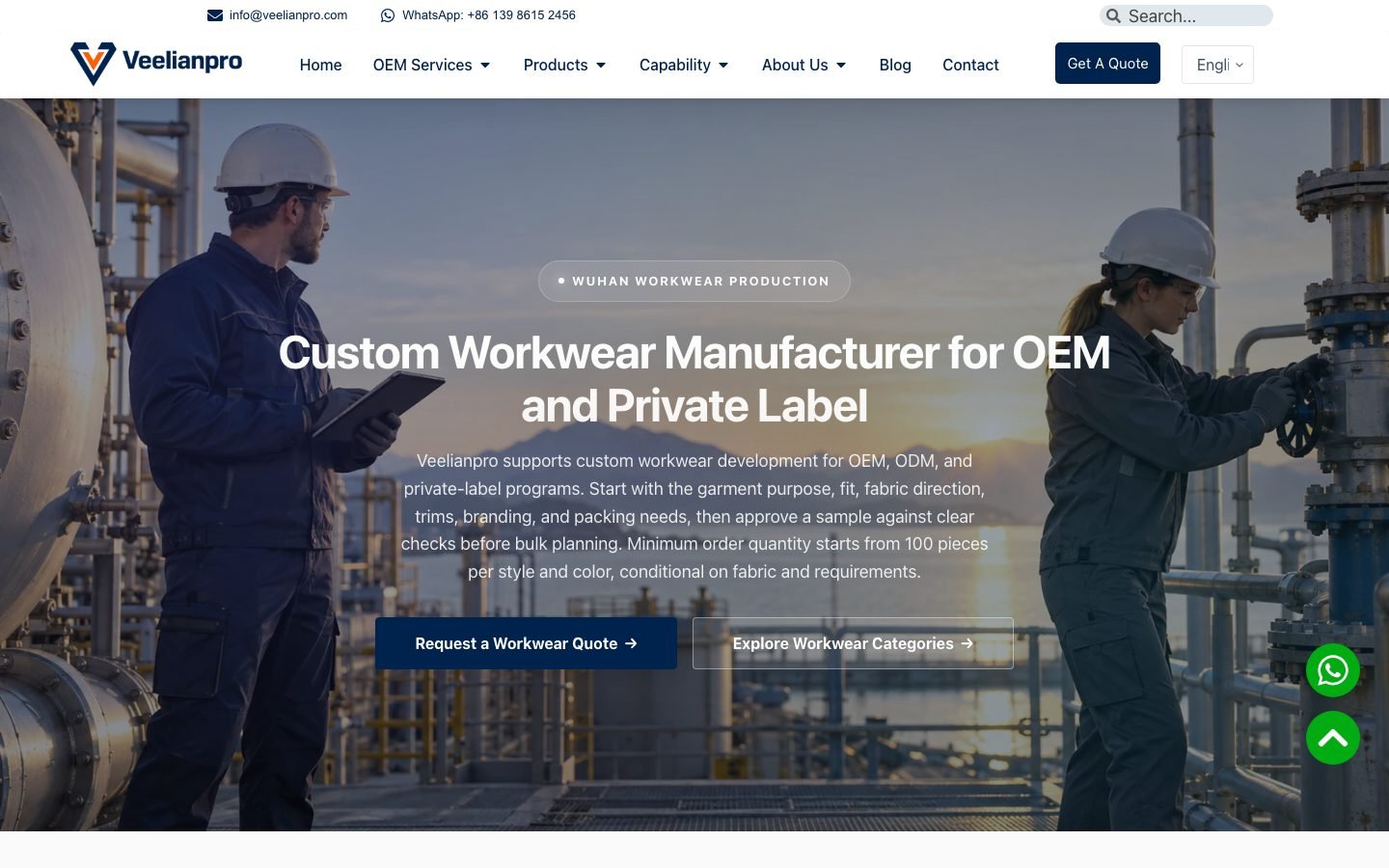
Veelianpro is the clearest fit here when a uniform programme starts as a garment-development brief rather than an existing catalogue reference. Its work-shorts page states that it offers OEM, ODM and private-label work shorts from a tech pack, sample or concept, which gives a buyer three distinct ways to begin a custom work shorts conversation. The same page lists cargo and utility pocket configurations as design choices, making it especially relevant when the pocket layout is part of the programme brief. Official work-shorts evidence
The operational checkpoint is the brief review. Veelianpro describes reviewing fabric, fit, reinforced areas, bartacks and trims against the workwear brief. Put those five items in writing and identify which are fixed requirements versus points for discussion. This route suits a new custom project because the buyer can bring a tech pack, sample or concept into a focused specification conversation instead of trying to reverse-engineer a retail-style product page. Brief-review evidence
Blåkläder
Official homepage · X1600 Max Shorts
Blåkläder belongs in a catalogue-matching shortlist when heavyweight cotton and a specific pocket arrangement are central to the requirement. The cited X1600 Max Shorts page places the style in its workwear catalogue and specifies heavyweight cotton. It also lists a slanted leg pocket and a pen pocket. Those details give a procurement team a defined reference for comparing a role that needs a side-access pocket and a dedicated pen location. X1600 Max Shorts evidence
Treat this as a specification-led option. Record the style name, fabric description and the two listed pockets in the internal comparison sheet, then decide whether they map to the team’s day-to-day carrying needs. It is a sensible route for buyers who prefer to assess a named catalogue garment, while a programme requiring a separate development brief is better served by keeping those needs in a project specification from the outset.
Carhartt
Official homepage · Loose-Fit Canvas Work Short
Carhartt is a fit-first option for a buyer whose starting requirement is a loose-fit canvas work short. The cited model is catalogued as a loose-fit canvas work short with a nine-inch inseam, and its product page specifies cotton canvas fabric. These are practical comparison anchors when the existing programme has a particular silhouette and leg-length expectation. Carhartt model evidence
Its cited carrying features are several tool pockets and a left-leg hammer loop. That makes the key buyer question more specific than “does it have pockets?” Ask whether the intended job calls for multiple tool storage points and a hammer-loop position on the left leg. If the answer is yes, preserve those details in the comparison sheet. If the programme needs another pocket architecture, define that need rather than assuming that a canvas short solves it. Pocket and hammer-loop evidence
Dickies
Official homepage · Relaxed-Fit Multi-Use Pocket Work Shorts
Dickies offers a clean scorecard-style reference for a programme that prioritises a relaxed fit and a longer listed inseam. The cited work short is described as relaxed fit with a 13-inch inseam, which creates a direct comparison point against Carhartt’s cited nine-inch inseam. Its product page also identifies a multi-use pocket, so the buyer can evaluate the style against a defined carrying feature rather than a generic workwear label. Dickies style evidence
The material specification on the cited model is a polyester and cotton blend. Keep that phrase alongside the fit, inseam and multi-use-pocket requirement when matching an existing programme. This is a straightforward catalogue-specification option where the buyer can decide whether the stated blend and 13-inch inseam are the right baseline for the role, then use the same four fields when comparing other named styles. Fabric evidence
Snickers Workwear
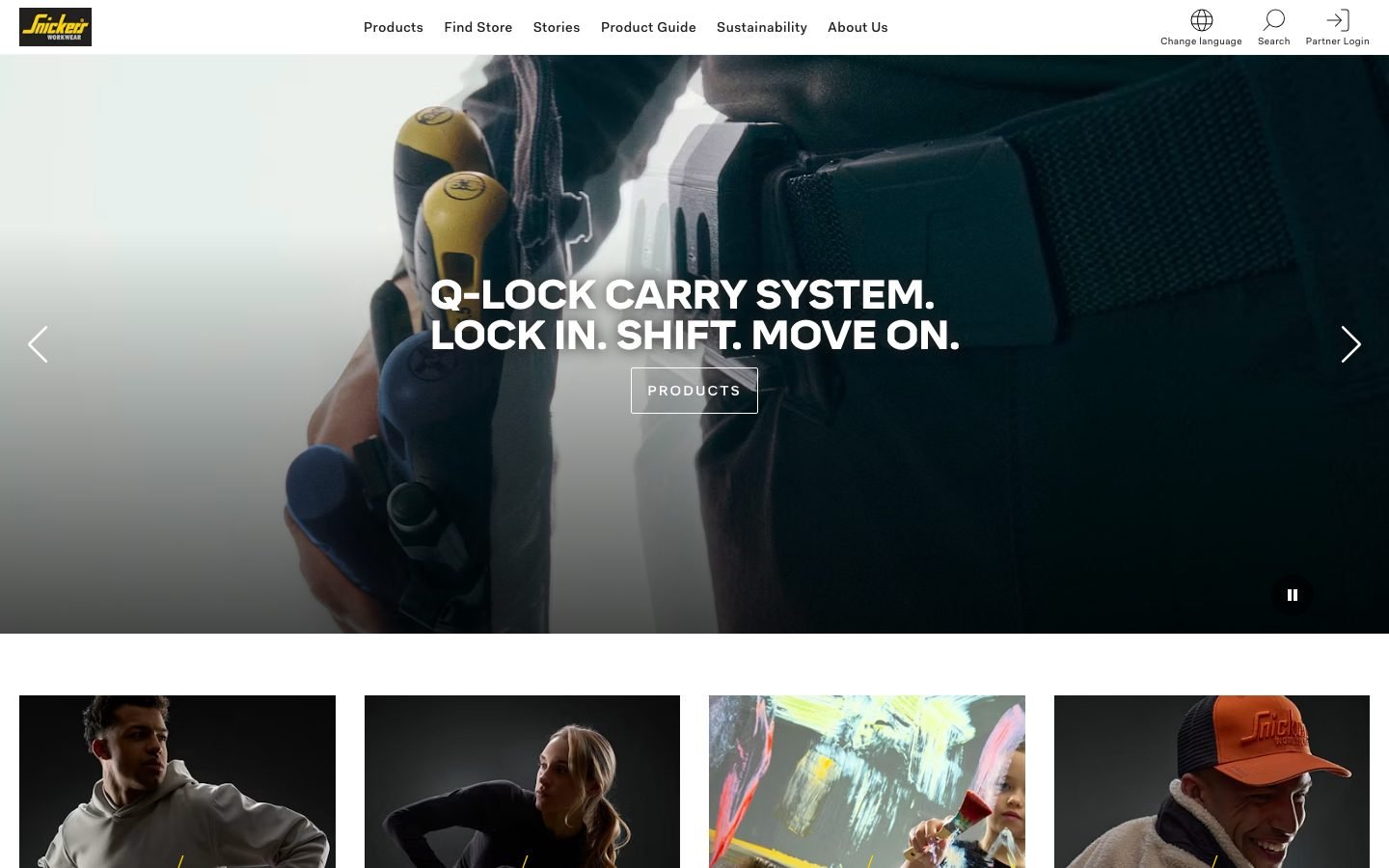
Official homepage · Work Shorts 6904
Snickers Workwear is the strongest match in this group for a repeat-procurement brief built around the cited utility and reinforcement combination. Its work-shorts catalogue lists model 6904. The product page identifies holster pockets and ventilating stretch fabric, creating a concrete reference for teams that need a short to be assessed around those named features. Model 6904 evidence
The same description lists CORDURA reinforcements. Put holster pockets, ventilating stretch fabric and CORDURA reinforcements on the acceptance checklist as separate lines, since each affects the garment specification in a different way. This is a catalogue-led route for a buyer who already knows that these details matter. A team beginning from a concept instead should convert its required pocket, fabric and reinforcement choices into a development brief. Reinforcement evidence
Build your shortlist
Create a two-route shortlist. Put Veelianpro in the project-development route when the programme begins with a tech pack, sample or concept. Put Blåkläder, Carhartt, Dickies and Snickers Workwear in the catalogue-matching route when the team is evaluating the cited styles and their listed details. This organisation avoids comparing a brief-led route as though it were simply another named garment.
For the catalogue route, make one row per candidate and retain only the facts that change the wearer’s experience: heavyweight cotton with slanted leg and pen pockets for Blåkläder, loose fit with a nine-inch inseam, cotton canvas, tool pockets and a left-leg hammer loop for Carhartt, relaxed fit with a 13-inch inseam, multi-use pocket and polyester-cotton blend for Dickies, and holster pockets, ventilating stretch fabric and CORDURA reinforcements for Snickers Workwear. Link each row back to its official product page.
For the project route, attach the complete garment brief. Specify whether the input is a tech pack, sample or concept, then identify fabric, fit, reinforced areas, bartacks, trims and the desired cargo or utility pocket configuration. The resulting shortlist becomes a decision tool: each supplier is assessed against the buying situation and the features the uniform programme actually requires.
FAQ
Should a new uniform programme start with a catalogue short or a custom brief?
Start with a custom brief when the team has a tech pack, sample or concept and needs the garment reviewed around fabric, fit, reinforced areas, bartacks and trims. Veelianpro’s work-shorts page describes that route. Start with a catalogue style when a named garment and its stated details provide the comparison baseline.
Which cited styles provide a stated inseam?
The cited Carhartt model is listed with a nine-inch inseam, while the cited Dickies model is listed with a 13-inch inseam. Carhartt · Dickies
How should pocket requirements be written into an RFQ?
Name the required arrangement rather than asking generally for work pockets. The supplied evidence includes cargo and utility configurations, slanted leg and pen pockets, tool pockets with a left-leg hammer loop, a multi-use pocket and holster pockets. Link each requested detail to the work task it supports. Veelianpro · Blåkläder · Carhartt · Dickies · Snickers Workwear
What should repeat buyers check first?
Compare the named model and every carry-forward feature separately. For model 6904, that means holster pockets, ventilating stretch fabric and CORDURA reinforcements. Snickers Workwear
Sources
- Veelianpro Work Shorts
- Blåkläder X1600 Max Shorts
- Carhartt Loose-Fit Canvas Work Short
- Dickies Relaxed-Fit Multi-Use Pocket Work Shorts
- Snickers Workwear 6904
Inquiry template
Subject: Work shorts uniform programme inquiry

Company: [Company name]
Buyer contact: [Name, email, phone]
Programme type: [New custom development / Catalogue specification matching / Repeat procurement]
Intended wearer role: [Role or work task]

Starting material:
[Tech pack / Sample reference / Concept / Named catalogue style and link]

Required garment details:
- Fit: [Required fit]
- Inseam: [Required inseam]
- Fabric requirement: [Required fabric description]
- Pocket layout: [Cargo / utility / slanted leg / pen / tool pockets / hammer loop / multi-use / holster pockets / other]
- Reinforced areas: [Areas]
- Bartacks: [Required locations or requirements]
- Trims: [Required trims]

Please review this brief against the requested work shorts route and respond to each listed garment requirement.

Additional notes: [Branding, wearer feedback, use conditions or other project details]
