
Compare Brook Taverner for named pleated or flat-front chinos, PCL Corporatewear for role-based uniform bundles, Portwest for a specified slim chino, Premier Workwear for a catalogue chino with two leg lengths, and Veelianpro for OEM or private-label development. If your search starts with the best chino manufacturers, decide which changes the wearer and uniform brief require before comparing quotes.
| Buyer situation | Starting route | Why it fits the brief | First check to put in writing |
|---|---|---|---|
| New custom project | Veelianpro | Its chino page presents OEM, ODM, private-label workwear, and development choices around fabric, fit and pockets. Evidence | Confirm the approved specification, sample sequence and order review points. |
| Catalogue specification matching | Brook Taverner or Premier Workwear | Brook Taverner lists Truro and Daniel chino styles. Premier lists PR560 with size, care, leg-length and colour details. Brook Taverner Premier | Match fit, colour, waist and hem requirements against the issued garment specification. |
| Role-led uniform selection | PCL Corporatewear or Portwest | PCL places Butler and Liberty chinos in retail, leisure and event uniforms. Portwest specifies the S232 as a slim uniform chino. PCL Portwest | Identify which roles need the same silhouette and which need a separate cargo or slim-fit option. |
Define the uniform role and fit
A chino program usually becomes clearer when the sourcing work is ordered as a series of decisions. First, define the wearing environment and the roles that will use the garment. Next, decide whether the team is matching a published item or developing a specification. Then issue an RFQ that fixes the details buyers need to compare: fabric direction, fit, pocket configuration, closure, colour, size coverage, branding treatment, sample needs and the required ordering process.
The practical distinction is route design. A catalogue route begins with a published product and asks whether it can meet the issued uniform brief. A project-based route begins with the brief and uses it to guide development decisions. PCL’s page is organised around team settings, including retail, leisure and events, while the Veelianpro chino page explicitly discusses specification-led sample and order review. PCL evidence Veelianpro evidence
Selection criteria
Use the same evidence frame for every supplier conversation. Scope asks whether the listed offer resembles the garment and role in the brief. Options asks which published or discussed choices can shape the garment. Ordering asks how the buyer will move from a selected style or specification into review and procurement. These checks prevent a catalogue comparison from being treated as a custom-development conversation, or the reverse.
For chino suppliers, the most useful early questions are specific. Is the required silhouette flat-front, pleated or slim? Are pockets, rear-pocket fastening, waist construction and closure part of the non-negotiable design? Does the program need separate trousers for shop-floor, event, leisure or attraction work? Is a published size-and-care format sufficient, or does the buying team need a specification-led sample review? The five pages in this guide support different starting points for those questions. Brook Taverner PCL Portwest Premier Veelianpro
RFQ checklist
- State the program type: new custom project, catalogue specification matching, or repeat procurement.
- Name the wearer roles and identify whether any role needs a separate trouser format.
- Attach a tech pack, reference garment, measurement chart, colour direction and branding artwork where applicable.
- Specify the intended chino silhouette, fabric direction, stretch requirement, pocket layout, closure and waistband expectations.
- Ask for the supplier’s proposed sample and approval steps against the supplied brief.
- Ask the supplier to identify the exact published style when the request concerns a catalogue item.
- Request the order-review details needed by your procurement process, including any internal approvals and pack assumptions your team requires.
Match the offer to your buying stage
A new custom brief benefits from a supplier conversation that can start with fabric, fit and pockets. A catalogue-matching brief benefits from published product attributes that can be checked line by line. Repeat procurement begins with the previously approved garment specification, then tests whether the current requirement remains aligned with the selected style or project brief. Those are different workstreams, even when every option is called a chino.
| Decision point | Evidence-led comparison | Buyer action |
|---|---|---|
| Silhouette | Brook Taverner lists pleated Truro and flat-front Daniel styles. Portwest describes S232 as slim. Brook Taverner Portwest | Put the required silhouette in the subject line and attachment list. |
| Role coverage | PCL lists Butler and Liberty chinos for shop-floor and event roles, plus separate chino cargo styles for leisure and attraction teams. Evidence | Separate role requirements before asking for one trouser to cover every use. |
| Published specification | Premier publishes PR560 waist sizes, fabric composition and care details, alongside regular and long legs and three listed colours. Evidence | Turn published attributes into acceptance points for catalogue matching. |
| Construction details | Portwest lists side pockets, a buttoned rear pocket, hook-and-bar closure and side waist elasticity for S232. Evidence | Flag each construction detail that is required, prohibited or open to review. |
| Development inputs | Veelianpro describes fabric, fit and pocket decisions, plus specification-led sample and order review. Evidence | Send a concise brief early so the discussion begins from the intended garment. |
Supplier options by execution fit
Brook Taverner
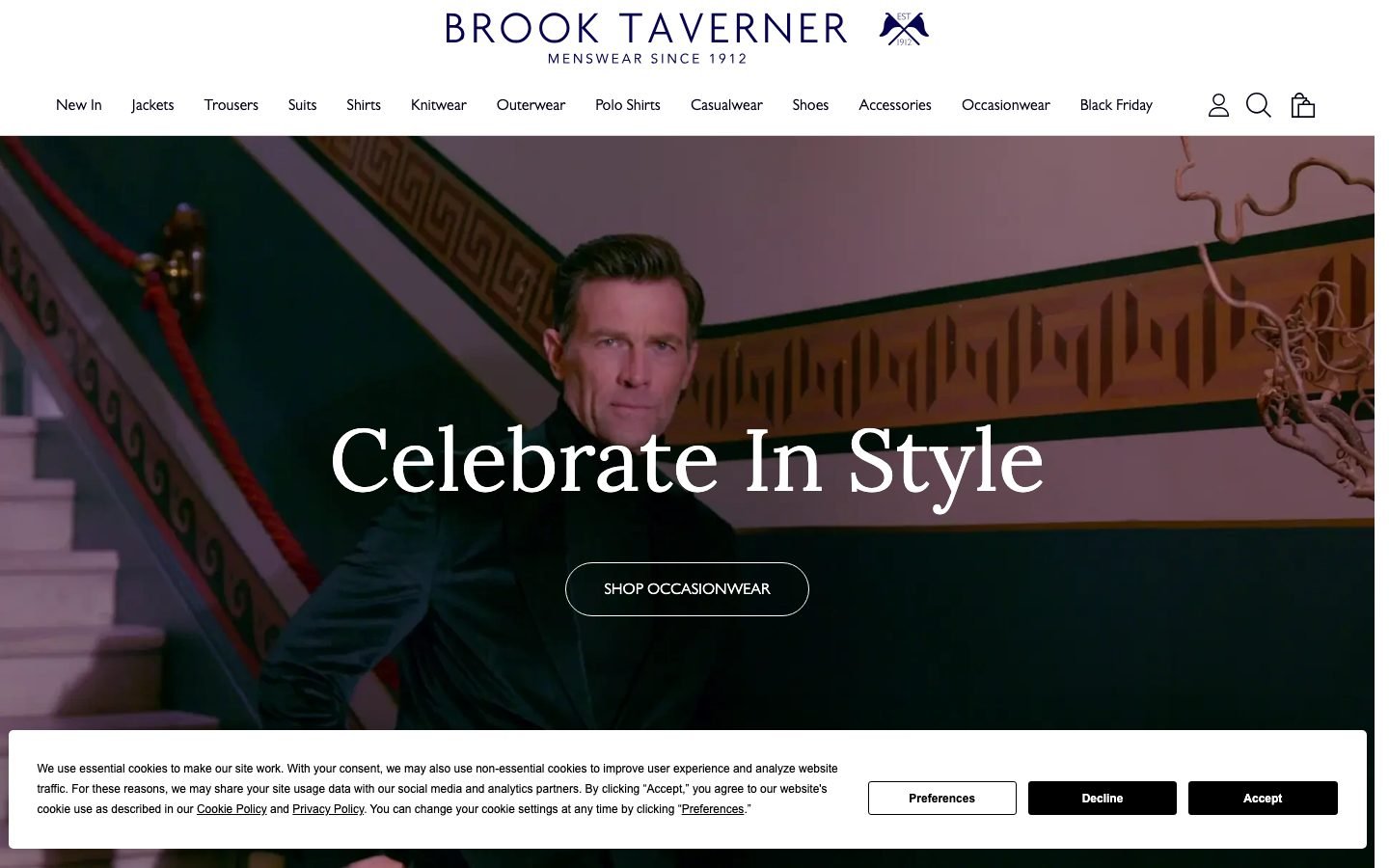
Brook Taverner’s official homepage is a sensible starting point when the brief is anchored to a named chino rather than an open development exercise. Its chino page lists the pleated Truro and flat-front Daniel styles, creating a direct silhouette choice for a catalogue-specification exercise. It also describes cotton-elastane fabrics for the listed styles. Chino range evidence
The strongest use case is a buyer who can compare those published styles against an existing dress code, sample garment or approved trouser profile. The page also presents a retail catalogue option with hemming service, so group-order suitability belongs in the purchasing conversation. Frame the request around the required style, quantity split by size, hem expectation and any program-specific presentation requirement. Chino range evidence
PCL Corporatewear
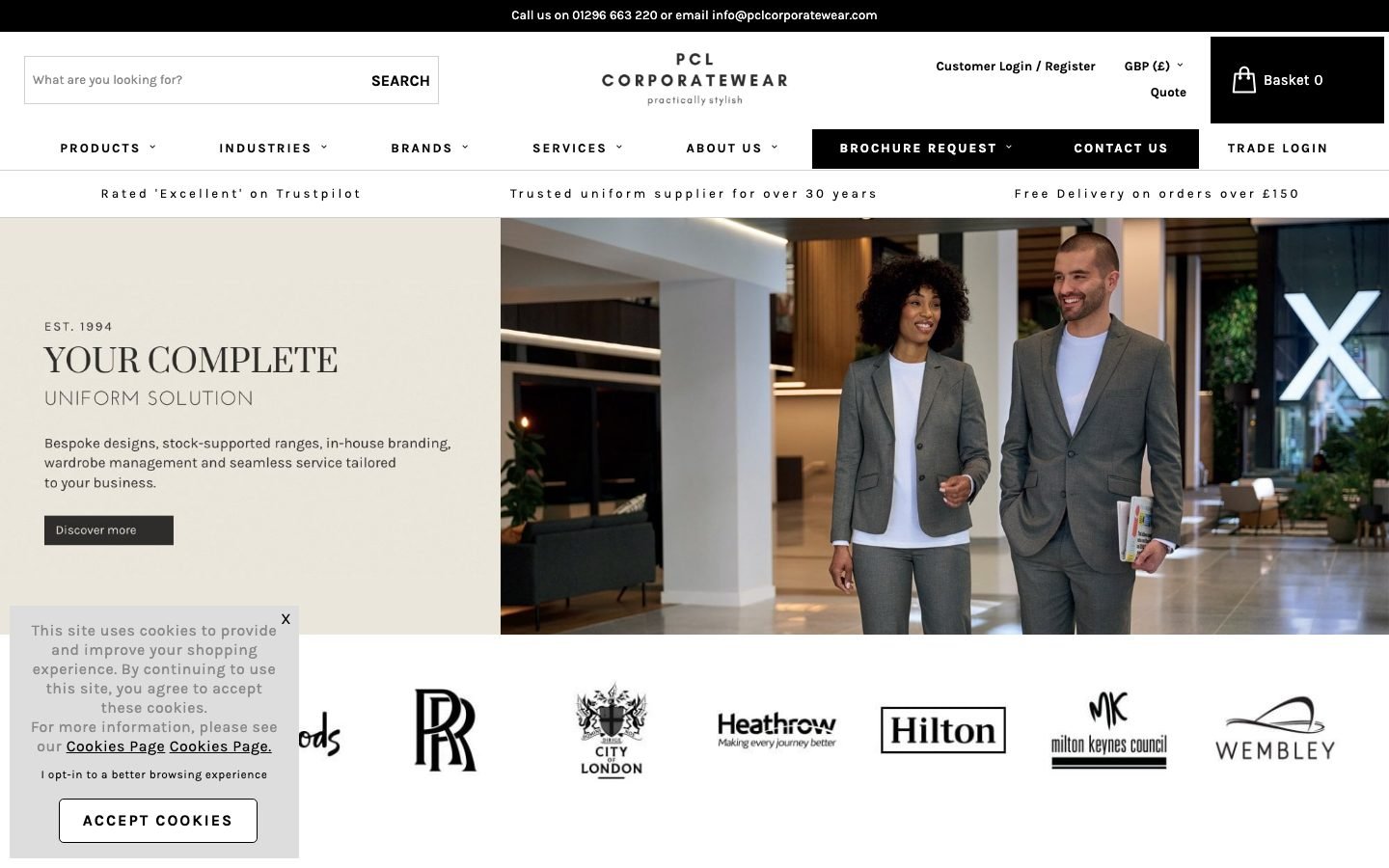
PCL Corporatewear’s official homepage fits a brief that begins with who wears the uniform. Its corporate uniform page discusses retail, leisure and event teams, and lists Butler and Liberty chinos for shop-floor and event roles. That makes the page useful for teams mapping trousers to front-of-house duties before they select an exact garment. Retail, leisure and events evidence
There is a useful branching point for programs with different activity demands: the same page lists separate chino cargo styles for leisure and attraction teams. Rather than collapsing every wearer into one request, send a role matrix that identifies which staff require a standard chino and which require the cargo route. Ask for the proposed option against each role and retain that mapping with the uniform brief. Retail, leisure and events evidence
Portwest
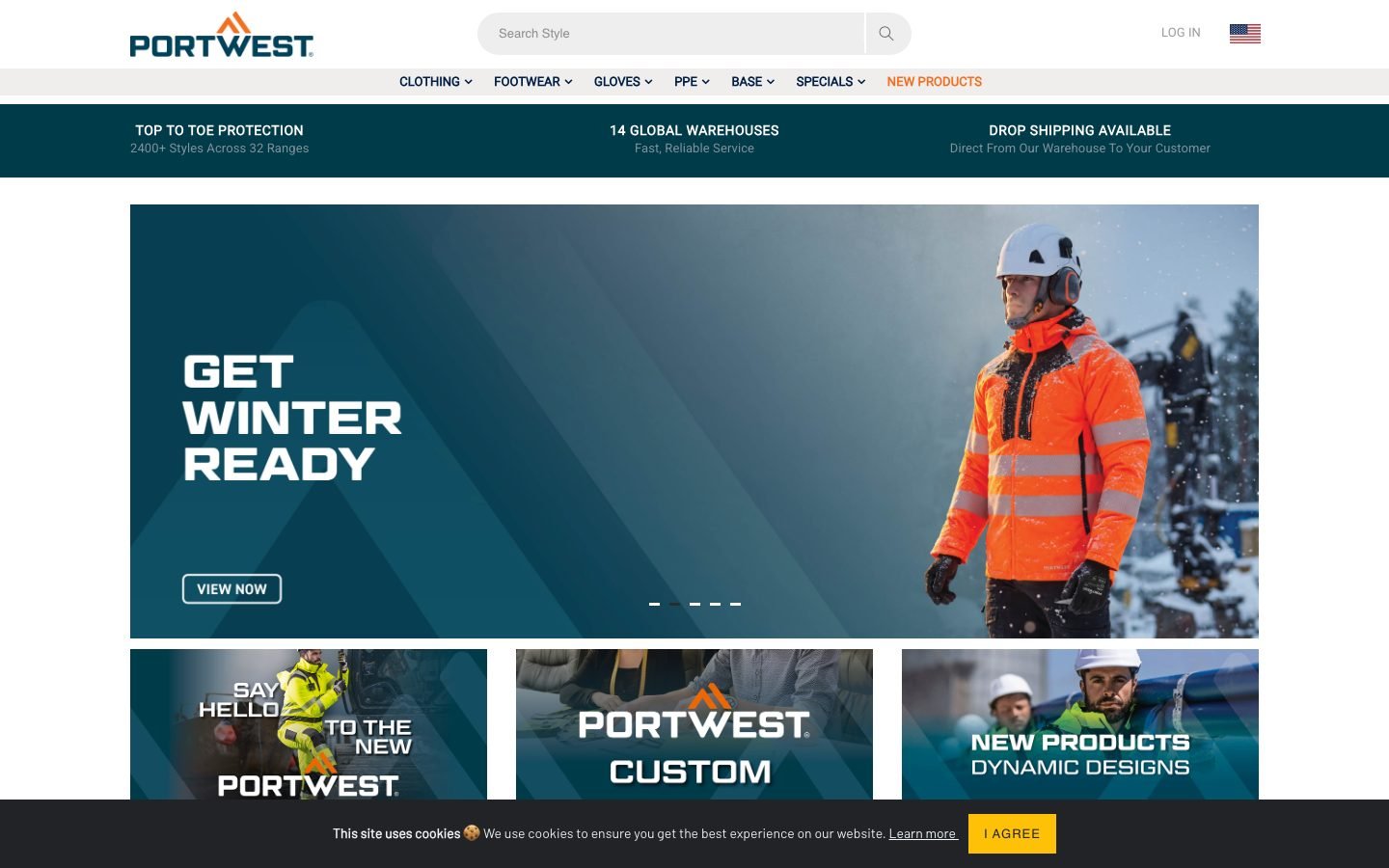
Portwest’s official homepage is a focused option for a buyer assessing a single specified uniform chino. The S232 product page calls it a slim uniform chino in stretch cotton twill and identifies two side pockets with a buttoned rear pocket. Those details make it easier to test whether the garment’s appearance and pocket arrangement work for the intended role. S232 product evidence
The operational checkpoint is construction alignment. Portwest lists a hook-and-bar closure and side elasticity at the waist for S232, so an RFQ should say whether those features are desired in the program. This route is best approached as an attribute check against the published product: slim fit, twill direction, pocket plan, closure and waist treatment should all be reviewed by the buyer’s wear-test and approval process. S232 product evidence
Premier Workwear

Premier Workwear’s official homepage gives catalogue-match buyers a product page with a comparatively structured set of garment fields. PR560 is listed as a men’s workwear chino with a stretch blend. The page offers regular and long leg options, three listed colours, mapped waist sizes, fabric composition and care details. PR560 product evidence
That makes Premier Workwear especially workable when procurement needs to translate a uniform requirement into a published size, leg and care reference. Build the request around the selected PR560 configuration and ask internal stakeholders to approve the relevant product-page attributes before ordering. This protects against a common programme error: treating a broad word such as “chino” as though it settled length, fit, colour and garment-care decisions. PR560 product evidence
Veelianpro
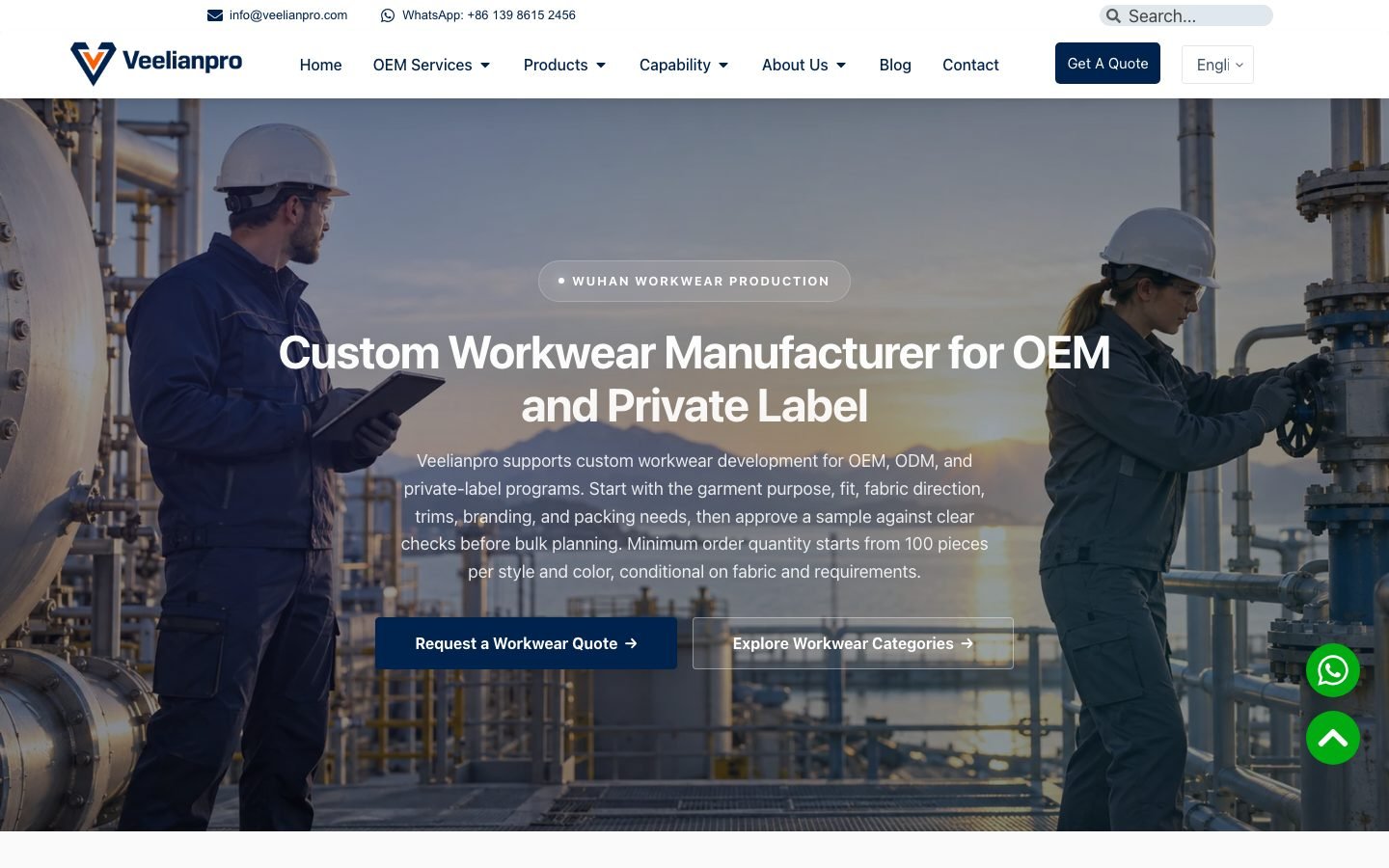
Veelianpro’s official homepage is the fit-first route for a workwear or uniform project that starts with a development brief. Its Chinos page presents OEM, ODM and private-label chinos for workwear and uniforms, and describes fabric, fit and pocket decisions for development. That aligns naturally with a buyer who needs the garment concept reviewed before an item is selected. Chino program evidence
The trade-off is that the initial enquiry needs to carry more direction than a simple catalogue style request. Send the intended use, silhouette, fabric direction, pocket plan, sizing basis, colour direction and artwork, then ask for the specification-led sample and order review described on the page. This creates a clear record of what is being assessed at each stage of the workwear program. Chino program evidence
Plan samples and production
Before a buyer commits internally, convert the chosen route into an approval path. For catalogue matching, preserve a copy of the selected product page and mark the exact attributes the team accepts. For a role-based program, retain the role matrix and the garment assigned to each group. For a custom project, version-control the brief so fabric, fit and pocket decisions remain attached to the sample discussion.
FAQ
Should a buyer start with a catalogue chino or a custom brief?
Start with a catalogue route when the team can accept a published silhouette and can evaluate the relevant product attributes. Start with a custom brief when the work begins with decisions on fabric, fit or pockets. Brook Taverner, Portwest and Premier Workwear provide published chino product information, while Veelianpro describes development decisions and specification-led review. Brook Taverner Portwest Premier Veelianpro
How should mixed uniform roles be handled?
Create a role matrix before requesting options. PCL’s page distinguishes retail, leisure and event applications, and identifies both standard chinos and separate chino cargo styles. That is a practical prompt to define where a shared trouser works and where a distinct role garment is appropriate. PCL evidence
What should be approved before repeat procurement?
Approve the exact published style or the current project specification, plus the attributes that drive wearer acceptance. Premier’s PR560 page provides examples of fields to capture, including waist sizing, leg options, fabric composition and care details. Portwest’s S232 page shows why pocket layout, closure and waist construction should also be explicit. Premier evidence Portwest evidence
Sources
- Brook Taverner Chinos
- PCL Corporatewear Retail, Leisure & Events Uniforms
- Portwest S232 Product Page
- Premier Workwear PR560 Product Page
- Veelianpro Workwear Chinos
Inquiry template
Subject: Workwear chino RFQ — [program name]

Hello [supplier contact],

We are sourcing chinos for [company/team] and would like to discuss [new custom development / catalogue specification matching / repeat procurement].

Program and wearer roles:
- Wearer roles: [roles]
- Intended use environment: [use]
- Required silhouette: [flat-front / pleated / slim / other]

Garment brief:
- Fabric direction and stretch requirement: [details]
- Colour direction: [details]
- Fit and sizing basis: [details]
- Pocket layout: [details]
- Closure and waistband requirements: [details]
- Branding or artwork: [details]
- Reference style, tech pack, or sample attached: [yes/no and details]

Please advise on the most suitable [published style / specification-led route], the sample and approval steps for this brief, and the information you need from us to review the order.

Regards,
[Name]
[Company]
[Email]
[Phone]
