
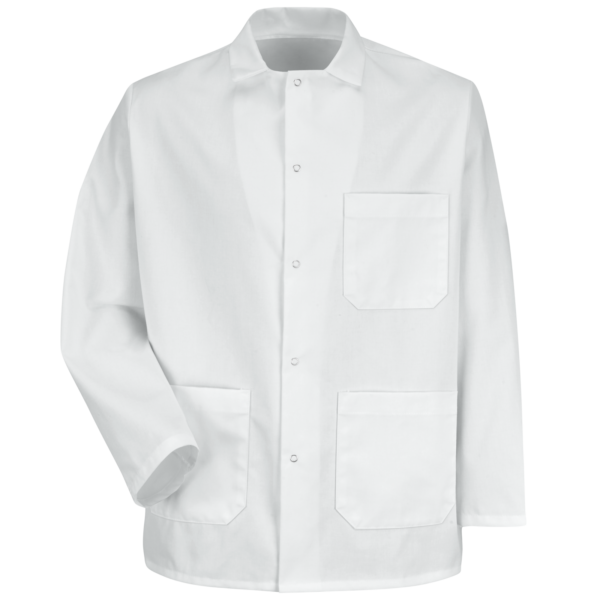
Develop a clean short butcher coat for food preparation, processing, and service teams, combining a buttonless gripper front, practical storage choices, and brand-ready detailing tailored to your approved fit and laundering routine.
Develop Food Service and Processing Work Coats with Veelianpro
Veelianpro can develop this short work coat from your design brief, with closure count, pockets, collar, vents, fabric, sizing, decoration, labels, and packing specified for your program. We support OEM, ODM, and private-label development from pattern work through sampling, with MOQ from 100 pieces per style and color, conditional on requirements.
Define the Workwear Brief
This development brief is built around a hip-length food-service coat with a neat front and adaptable utility. Choose a four- or five-gripper closure, chest and lower patch pockets or a pocketless front, side vents, sleeve finish, collar profile, color, and identity details to suit daily operational needs.
Choose a four- or five-gripper closure that balances clean presentation, secure wear, and preferred neckline.
Specify a chest pocket, two lower pockets, or a pocketless front for your daily task flow.
Select an easy-care twill development target suited to comfort, durability, appearance, and your planned laundering process.
Approve fit block, sleeve length, side vents, logo placement, labels, and packing details before bulk production.
Fabric, Fit and Construction Options
Select an easy-care woven fabric appropriate for the intended work environment, handfeel, wear life, and wash process. Twill is a practical starting direction for a structured appearance, while alternative blends or fibers can be reviewed for breathability, softness, or durability. Final fiber content, weight, finish, shrinkage allowance, and colorfastness targets are confirmed during development.
Build the coat with a smooth buttonless gripper front and a pattern engineered for the selected fit block. Options include a stand, notched, or simple collar; one chest pocket; two lower patch pockets; no pockets; side vents; long or short sleeves; and reinforced stress points. Closure placement, pocket dimensions, seam allowances, and finishing are set in the approved specification.
From Brief to Approved Sample
Start with a development sample to review silhouette, fit, closure operation, pocket access, fabric handfeel, decoration position, and label layout. We can revise the pattern and specification after feedback, then prepare a pre-production sample against approved materials and workmanship standards. Share target quantities, size breakdown, destination, and required delivery window for planning.
- Brief Alignment Confirm use, fit, closure, pockets, colors, and branding requirements.
- Material Sourcing Review fabric and trim options against approved practical requirements.
- Prototype Sampling Make samples for fit, construction, decoration, and measurement approval.
- Production Release Finalize approved specifications, labels, packing, quantities, and delivery requirements.
What to Send for a Useful Quote
Garment Requirements Share target use, wearer profile, style details, and color plan.
Branding Details Provide logo files, decoration placement, labels, and packing artwork.
Order Scope State quantities by style and color plus destination.
Food Service and Processing Work Coats Procurement FAQs
Five grippers or four for your preferred neckline?
Choose five grippers for a more fully closed front, or four when a lower opening better fits the pattern. Confirm closure spacing, neckline shape, finished length, operation with gloves, reinforcement method, and wash-trial results on the approved sample before production.
Chest and lower pockets, or a pocketless front?
Select one chest pocket plus two lower pockets for routine tool and personal-item access, or choose a pocketless front where a smooth exterior is preferred. Approve pocket dimensions, openings, stitch reinforcement, drainage or contamination-control needs, and final placement during sampling.
Which fabric and laundering conditions should guide development?
Develop an easy-care twill or alternative fabric around your required handfeel, durability, breathability, and laundering routine. Confirm fiber blend, weight, colorfastness targets, shrinkage allowance, stain-release preference, care method, and wash-trial acceptance criteria on production-representative samples before bulk approval for intended end use.
Would side vents improve mobility and shift comfort?
Include side vents when the wearer needs easier movement and airflow during active shifts; omit them for a more enclosed silhouette. Confirm vent height, bartack reinforcement, hem shape, overlap or opening construction, coverage expectations, and laundering stability on the approved fit sample.
What fit block and sizes should be approved?
Approve the fit block from wearer measurements and task movement, then grade a size range that matches your program. Check chest ease, shoulder mobility, sleeve reach, back length, collar comfort, garment balance, and measurement tolerances through a fitted prototype before size-set approval.
Where should branding and private labels be placed?
Place branding where it remains visible without disrupting pocket access or closure function, commonly at the chest, sleeve, or back yoke. Confirm decoration method, artwork scale, color contrast, label content, care-label position, attachment method, and pack presentation on the pre-production sample.
Discuss Your Food Service and Processing Work Coats Program
Request a quote with your design brief, target quantity, colors, sizes, decoration, labeling, packing, destination, and required delivery date for a tailored production review.



Reviews
There are no reviews yet.