
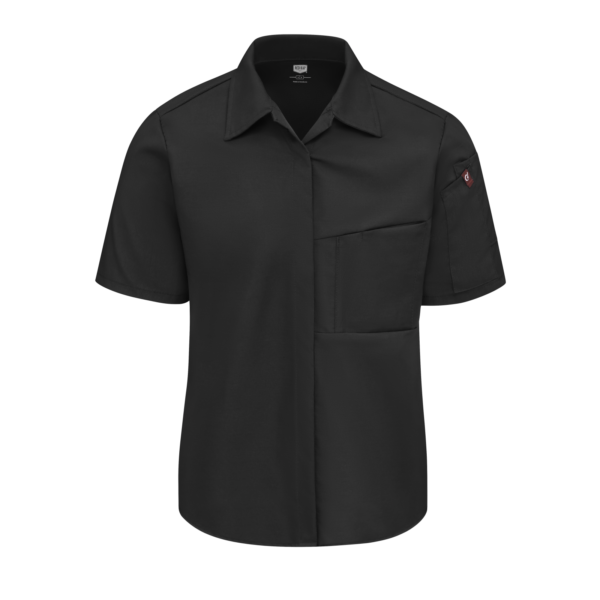
Develop a women’s-fit short-sleeve cook shirt for active kitchens, combining a lightweight woven body, full mesh back, concealed snaps, and accessible storage for thermometers, pens, and selected culinary tools.
Develop Custom Food Service Uniforms with Veelianpro
This women’s ventilated cook shirt can be developed with a shaped fit, concealed snap closure, mesh back, chest organizer pocket, and sleeve tool pockets. Choose fabrics, colors, branding, labels, and packing. MOQ starts from 100 pieces per style and color, subject to requirements.
Define the Workwear Brief
For restaurant, catering, bakery, culinary-school, and hospitality teams, this shirt combines a polished uniform appearance with practical airflow and organized storage. The reference-inspired layout is adaptable: buyers can confirm fit ease, collar shape, pocket dimensions, closure details, and decoration placement for their operating environment.
Confirm size range, movement ease, sleeve shape, hem length, and silhouette for active kitchen teams. A fit sample with representative wearers helps establish practical grading before production.
Choose a lightweight woven body, full mesh back panel, mesh opacity, stretch, and coordinated panel color. Confirm the preferred laundering route before approving material construction.
Specify concealed snap placement and finish, plus chest and sleeve pocket dimensions for the team’s pens, thermometers, notes, or selected culinary tools.
Define oil- and stain-management testing targets, decoration method, labels, packing, color quantities, and MOQ feasibility. MOQ starts from 100 pieces per style and color, subject to requirements.
Fabric, Fit and Construction Options
Specify a lightweight woven fabric for the body and breathable performance mesh for the back panel. Polyester-cotton blends, recycled synthetic options, or alternative fiber programs may be evaluated for hand feel, durability, care route, color, and budget. An oil- and stain-management finish may be developed, with agreed targets tested on the final approved fabric and garment.
Use a women’s pattern with selected ease for reaching, bending, and sustained kitchen work. A concealed snap placket can create a clean front, while snap type, finish, spacing, and collar treatment remain buyer choices. Develop an angled or inset chest pocket with pen division and sleeve compartments sized for approved tools. Reinforcement and seam finishing can follow the intended laundry route.
From Brief to Approved Sample
Start with a tech-pack review covering measurements, grading, fabric direction, mesh placement, pockets, snaps, colors, artwork, labels, and packing. A development sample lets the team assess fit, mobility, ventilation, pocket function, and presentation. Agree test methods and acceptance targets where finishes or laundry durability matter. Revision samples can confirm changes before bulk release.
- Confirm Design Brief Align fit, ventilation, pockets, colors, and branding.
- Source Materials Select body fabric, mesh, trims, and finish direction.
- Review Prototype Check fit, pocket access, closure operation, and appearance.
- Approve Production Confirm materials, workmanship, packing, and test requirements.
What to Send for a Useful Quote
Order Breakdown Share quantities by color, size, and fit.
Branding Details Provide logo artwork, labels, decoration, and packing preferences.
Performance Targets State finish and laundry-durability requirements for approval.
Custom Food Service Uniforms Procurement FAQs
What women's fit and size range should we develop?
Develop a women’s pattern with graded sizing and practical working ease for reaching, bending, and long shifts. Confirm body measurements, silhouette, sleeve and hem lengths, layering allowance, and fit review with representative wearers before approving the size specification and bulk production.
Should the shirt have a breathable mesh back?
A full mesh back is a practical airflow option for hot-kitchen teams, paired with a lightweight woven front and sleeves. Specify mesh stretch, opacity, color matching, seam finish, and laundry route; assess comfort, appearance, and panel stability through samples before confirming production construction.
How should we specify oil- and stain-management performance?
Treat oil- and stain-management as a development target for the chosen fabric, then test the finished garment after agreed laundering cycles. Define test method, relevant stain types, acceptance criteria, appearance retention, and restricted-substance needs before approving fabric, finish, and production for bulk release.
Should we use hidden snaps on the front?
Concealed snaps can give kitchen uniforms a clean front and quick closure. Select snap material, cap finish, pull-strength target, collar and hem positions, and visibility preference. Validate closure security, comfort, and wash durability on the approved sample before confirming the production standard.
Which chest and sleeve pocket layout works best?
An inset chest pocket with a pen division and sleeve compartments can suit teams carrying thermometers or slim tools. Confirm tool dimensions, handedness, pocket opening security, stitching reinforcement, placement, and decoration clearance through a wear trial before approving the selected layout for production.
What laundering process and durability target do you need?
Choose home laundering or commercial processing early, because fabric, trim, finish, labels, and seam construction should suit that route. Set wash-cycle, dimensional-change, color-retention, snap-function, and appearance criteria, then verify them on representative finished-garment samples before releasing bulk production for delivery.
Discuss Your Custom Food Service Uniforms Program
Send quantities by color and size, logo files, delivery market, laundry route, and preferred fabric, finish, labeling, decoration, and packing options for a tailored quotation.


Reviews
There are no reviews yet.