
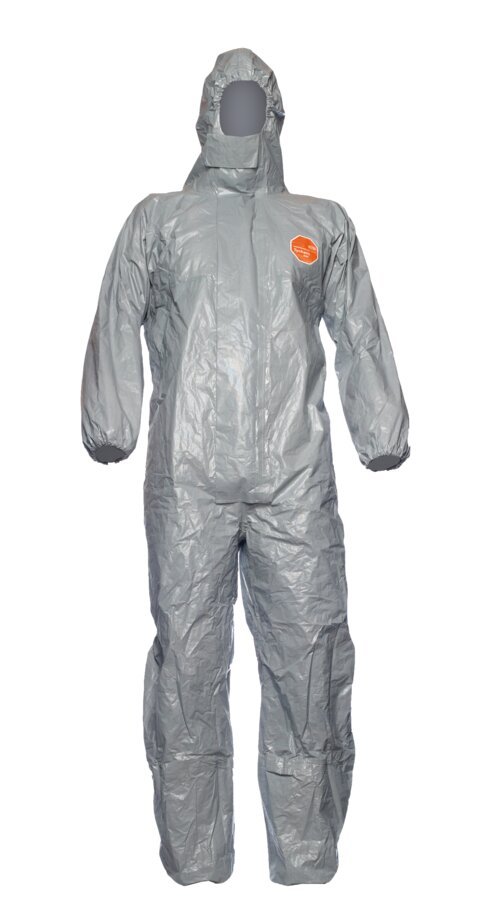
Develop a private-label hooded chemical-resistant coverall for controlled industrial tasks, specifying barrier material, sealed seam strategy, protected zip, PPE-compatible hood, elasticated openings and packaging around your documented hazard assessment.
Develop Chemical-Resistant Clothing with Veelianpro
Source a hooded chemical-resistant coverall with thumb loops and a protected front closure developed for your chosen glove and respirator interface. Veelianpro supports OEM/ODM development, fabric and trim sourcing, labels and packing; MOQ starts from 100 pieces per style and colour, conditional on requirements.
Define the Workwear Brief
Designed as a development brief for disposable or defined-reuse programmes, this full-body coverall can combine a hood, front zip protection, elasticated face, wrists, waist and ankles, plus optional thumb loops. Confirm the wear sequence, exposure zones, mobility expectations, visibility preference and individual or carton packing before specification release.
Specify chemicals, concentrations, physical states, contact duration, and splash or spray conditions for evaluation.
Confirm the respirator and face protection used so the hood opening can be developed accordingly.
Select taped or sealed seam targets, protected front closure, chin panel, and required elasticated openings.
Define sampling, wearer trials, compatibility review, third-party testing, labels, packing, and traceability before production approval.
Fabric, Fit and Construction Options
Select a barrier laminate or coated nonwoven after reviewing the chemicals, concentrations, physical states, contact duration and temperature conditions relevant to the task. Material weight, hand feel, opacity, noise, drape and inside comfort can be adjusted for the approved use case. Chemical resistance and any biological, particulate or antistatic performance remain validation targets for the exact finished style.
Develop stitched-and-sealed or taped seam construction where the hazard review calls for it, with seam placement planned away from high-movement stress points. Options include a two-way front zip beneath one or two protective flaps, an adjustable chin tab, shaped hood, elasticated openings and thumb loops. Final closure geometry must be reviewed with the specified respirator, gloves and footwear.
From Brief to Approved Sample
Begin with a technical pack covering end use, target hazards, size chart, PPE interface, material options, closure layout, branding and packing. We can make fit and construction samples, then revise patterns after wearer feedback. Approve the final specification only after the buyer's compatibility review and required third-party testing for the intended exposure scenario.
- Hazard Brief Confirm site exposure conditions required interfaces and intended use workflow
- Material Review Assess candidate materials closures and seam constructions against specified project targets
- Prototype Sampling Create fit samples with selected construction and branding details
- Validation Approval Review wearer trials testing requirements and pre-production approvals together
What to Send for a Useful Quote
Exposure Profile Share chemicals concentrations contact duration and anticipated exposure conditions
PPE Interface Identify respirator gloves footwear and required hood or cuff fit
Order Details Provide size range labels packing artwork and validation requirements
Chemical-Resistant Clothing Procurement FAQs
Which chemicals, concentrations, physical states and exposure durations require evaluation?
Provide a hazard matrix before material selection, covering each chemical, concentration, liquid or vapor state, contact duration, temperature, and exposure mode. We can source candidate barrier materials and build samples, but the finished approved style must undergo compatibility review and testing for the stated use conditions.
Is exposure limited to splash, spray, particulates, or biological contamination?
Define the exposure envelope first: splash, spray, particles, biological contamination, or another hazard. The coverall can be developed with a hooded one-piece form, protected closure, and selected barrier material; seam design and final protective suitability require validation against the buyer’s exact assessment and intended working procedure.
Which respirator should the hood opening fit?
Specify the respirator model and face-protection arrangement at the sampling stage. We can develop a hood opening, elasticated face area, chin tab, and mobility allowance around that interface. Conduct wearer trials while using the complete PPE set, then approve the pattern only after fit, donning, and doffing checks.
Do you need sealed seams and a protected closure?
Yes, these can be specified as development features where the hazard assessment calls for them. Options include taped or sealed seams, a covered front zip, double storm flaps, and a chin closure. Their construction, adhesion, and barrier performance must be tested on the final material and approved garment.
Should cuffs use thumb loops and elasticated openings?
Choose these details when they improve interface stability with the buyer’s gloves, boots, and face protection. We can develop thumb loops plus elasticated wrists, waist, and ankles, then refine tension and grading through samples. Confirm that the features do not obstruct required donning, movement, or removal procedures.
What approval and testing steps precede bulk production?
Approve bulk production only after material review, prototype sampling, wearer evaluation, chemical compatibility assessment, and the agreed test program for the finished style. We can coordinate pattern, trims, labels, decoration, and packing. MOQ starts from 100 pieces per style and colour, conditional on approved requirements and production details.
Discuss Your Chemical-Resistant Clothing Program
Send your hazard summary, size breakdown, target quantity, artwork and packing request. We will scope material, construction, sampling and conditional production MOQ.


Reviews
There are no reviews yet.