
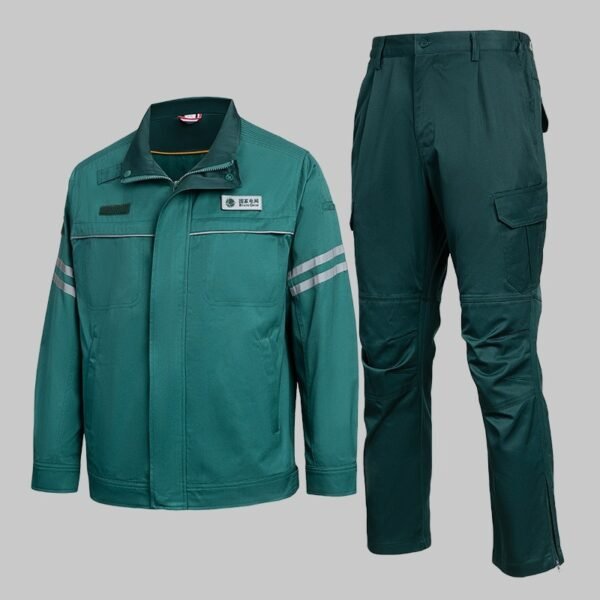
Develop a high-visibility anti-static workwear set with an action-back mesh panel, articulated knees and configurable reflective placement for utility, maintenance and industrial teams requiring branded, work-ready uniform programs.
Develop Industrial High-Visibility Uniform Sets with Veelianpro
This two-piece high-visibility anti-static workwear set can be developed with stand collar, front zip, action-back ventilation and pocket choices. Confirm whether static-control performance is a tested requirement, then align fabric, reflective layout, branding and size grading before approval. MOQ starts from 100 pieces per style and color, conditional on requirements.
Define the Workwear Brief
Designed as a configurable jacket-and-trouser program, this model draws on a stand collar, zip closure, back mobility treatment, knee shaping, cuff adjustment and multi-pocket utility. Choose fluorescent color blocking, reflective-trim positions, lining level and storage layout around actual tasks, climate, layering needs and workplace rules.
Define the required anti-static performance target and testing standard before selecting materials for the approved style.
Choose fluorescent color blocking and reflective-trim placement to suit workplace conditions and target-market visibility requirements.
Specify action-back pleats, articulated knees, cuff adjustments, and ventilation options for active inspection and repair work.
Confirm pocket access, zipper and collar details, logo placement, labels, and private-label packing requirements.
Fabric, Fit and Construction Options
Select a woven shell or blended workwear fabric according to handfeel, abrasion expectations, breathability and care routine, with optional mesh placement at the action back. Anti-static yarn or finish options can be sourced to suit the approved performance target. High-visibility ground fabric, contrast panels, lining and reflective materials should be finalized together after application, climate and test requirements are confirmed.
Build the set with a full front closure, stand collar, shaped knees, adjustable cuff treatment and a movement-focused back panel. Pocket options may include chest, internal, hip, cargo or secured compartments, selected for the job rather than added by default. Reinforcement zones, seam specification, reflective-trim placement and lining construction are confirmed against wear conditions, branding locations and approved samples.
From Brief to Approved Sample
Start with a brief covering end use, target market, fit block, size range, color layout, pockets, decoration and packaging. We develop patterns, source fabrics and trims, prepare samples, and revise details after review. Approve the sample, points and required testing plan before bulk production. MOQ starts from 100 pieces per style and color, conditional on requirements.
- Brief Review Confirm worksite, garment format, branding, and performance targets together.
- Material Planning Select fabric, ventilation, trims, and visibility layout options.
- Prototype Sampling Develop pattern, fit sample, and decoration placement for review.
- Approval Handoff Confirm approved details before bulk production planning begins.
What to Send for a Useful Quote
Target Standard State applicable anti-static and visibility testing requirements for final approval.
Size Requirements Provide size range, fit notes, quantities, destination, and seasonal use.
Brand Assets Share artwork, label details, packaging, and preferred decoration guidance.
Industrial High-Visibility Uniform Sets Procurement FAQs
What anti-static target should the approved garment meet?
Set the required anti-static target before fabric selection and sampling. Confirm the applicable workplace standard, test method, laundering expectation, and target market. Then approve the exact fabric, trims, seam construction, and reflective layout in a pre-production sample; testing must apply to the approved finished style.
Which fluorescent base colour and reflective layout suit your site?
Choose the base colour and reflective-trim pattern around your worksite’s visibility rules and garment type. Review contrast panels, tape placement across torso and limbs, logo clearance, and size grading. Confirm the layout on every size sample, because coverage and branding space can change with the pattern.
Do you need a two-piece uniform or coverall?
Select a two-piece set when separate sizing, replacement, or seasonal layering matters; choose a coverall when continuous body coverage suits the task. Define whether pieces may be ordered separately, then check rise, inseam, jacket length, and overlap during bending, reaching, climbing, and seated work.
Should the back, knees, and cuffs improve mobility?
Add action-back pleats, articulated knees, and adjustable cuffs only where worker movement demands them. Match the shaping to typical reaching, squatting, climbing, and tool use. Review ease allowance, reinforcement placement, closure comfort, and sleeve or trouser length through wear trials before bulk approval.
Which work pockets are essential for your crews?
Specify pockets by the items workers carry, not by appearance alone. A workable brief can define chest, internal, cargo, tool, and secure zipped pockets, plus closures and drainage. Check access while wearing gloves, capacity without snagging, placement around reflective trim, and reinforcement at high-stress points.
What logo, label, and packaging details need specification?
Provide artwork, placement maps, colour references, label content, and packing requirements at the sampling stage. Confirm decoration method against the selected fabric and reflective zones, then inspect a branded sample for legibility, adhesion, wash appearance, and comfort. Private-label details can include size labels, care labels, cartons, and polybags.
Discuss Your Industrial High-Visibility Uniform Sets Program
Share end use, target market, color plan, logo files, size range, required quantities and testing targets for a focused development quotation and sample plan.




Reviews
There are no reviews yet.