


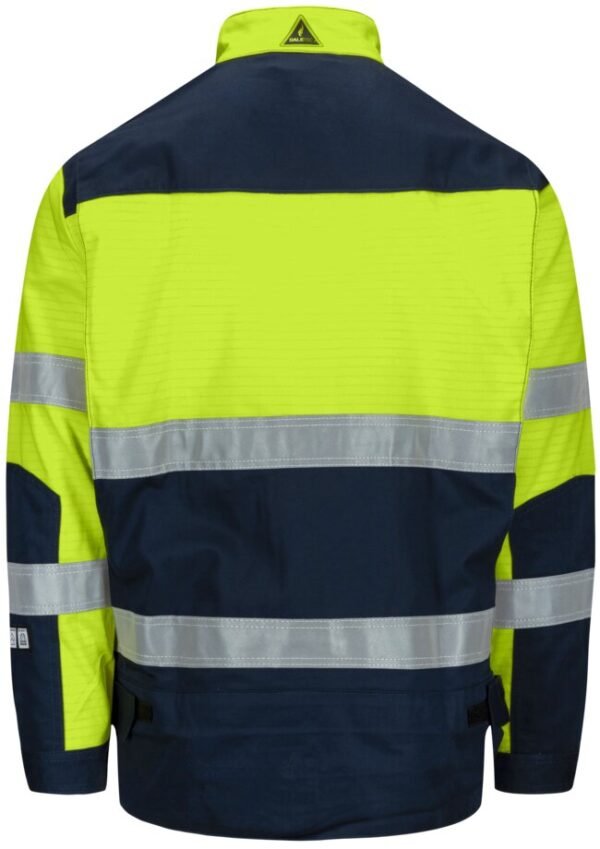


Develop a private-label high-visibility work jacket with a concealed front closure, articulated mobility back, extended rear coverage, practical pocketing and adjustable fit details, tailored around your crew’s tasks, climate, branding and compliance targets.
Develop OEM/ODM Work Jackets and Industrial Outerwear with Veelianpro
Veelianpro develops this work-jacket direction through OEM/ODM pattern development, material and trim sourcing, samples, decoration, labels and packing. Start from a reference or tech pack, then confirm fit, color blocking, pocket access, closure details and any performance-testing targets. MOQ starts from 100 pieces per style and color, subject to requirements.
Define the Workwear Brief
Designed as a configurable industrial outerwear program, this jacket can combine a fluorescent contrast layout, sleeve and body reflective trim, high collar, covered zip front, chest and hand pockets, action-back shaping, and longer rear hem. Select features according to site movement, storage needs, weather exposure and brand presentation.
Specify an action-back panel and extended rear hem for reaching, bending, and dependable lower-back coverage.
Confirm fluorescent color blocking and reflective trim locations around the torso and sleeves before sampling.
Choose chest, hand, internal, or tool-access pockets alongside a concealed zipper, flap, and adjustment details.
Define required flame, arc, electrostatic, or high-visibility targets; test the exact approved jacket construction.
Fabric, Fit and Construction Options
Choose shell, lining and reinforcement materials after reviewing wearer activity, weather, laundering expectations and decoration method. Options may include durable woven shells, breathable linings, contrast panels, abrasion-focused reinforcements and reflective trim appropriate to the approved design. If flame, arc, electrostatic or visibility protection is requested, material selection and finished-garment testing must support the specified target.
Build the jacket around a graded fit block with room for work layers and reaching motions. Development options include a concealed zipper under a front flap, stand collar, cuff adjustment, adjustable waist or hem, two chest pockets, two front pockets, internal storage, and a pleated action back. Confirm seam reinforcement, trim placement and closure accessibility during sampling.
From Brief to Approved Sample
Share a reference image, tech pack, target market, size range, color plan, logo artwork and required end use. We can develop patterns, source proposed fabrics and trims, make a sample, and revise fit, pockets, color blocking, labels and packing before bulk approval. Testing requirements should be agreed for the exact approved style.
- Design Review Review reference direction, wearer tasks, fit, pockets, and branding requirements.
- Material Planning Select fabric, trims, color layout, and performance testing targets.
- Pattern Sampling Develop pattern, graded sizing, prototype construction, and decoration placement.
- Sample Approval Refine approved sample details before confirming bulk production specifications.
What to Send for a Useful Quote
Use Environment Share wearer tasks, climate, layering needs, and required movement range.
Visibility Requirements Confirm color-block layout, reflective trim placement, and visibility testing targets.
Protection Targets State required flame, arc, electrostatic, or other tested performance targets.
OEM/ODM Work Jackets and Industrial Outerwear Procurement FAQs
Which work environment and tasks should guide jacket development?
Start with the wearer’s shift, movement range, weather exposure, and carried equipment. These inputs guide fabric weight, lining, reinforcement, pocket access, and fit ease. Confirm laundering expectations, layering needs, abrasion zones, and whether operators climb, drive, kneel, or work around moving equipment before sampling.
Do you need high-visibility color blocking and reflective trim placement?
Yes, we can develop a visibility-led color-block layout and specify reflective trim locations as design options. Define the wearer’s viewing angles, logo zones, seams, pocket interruptions, and size range first. If regulated visibility performance is required, test the exact approved fabric, trim, pattern, and finished garment.
Should the jacket include an action back and extended hem?
Choose an action-back panel and extended rear hem when wearers reach overhead, bend frequently, or need better coverage while working. Confirm the back construction does not restrict harnesses, equipment belts, or seated tasks. Review sleeve reach, body length, hem sweep, and layered fit on representative wearers.
Which pockets should the work jacket include?
Select pockets around the tools and documents actually carried: flap chest pockets for secure small items, front hand pockets for daily access, and internal pockets for protected storage. Define opening size, closure type, drainage, reinforcement, and placement so pockets remain reachable with gloves, harnesses, or equipment belts.
Do you prefer a concealed zip and adjustable openings?
A concealed front zip under a protective flap is practical where snag reduction and a cleaner front are priorities. Specify zipper gauge, puller access with gloves, flap closure, and collar finish. Add adjustable cuffs, waist, or hem only where they improve fit, weather sealing, or equipment compatibility.
Which protective performance targets require testing for your application?
Identify the hazards, exposure conditions, and required performance targets before material selection. We can develop the jacket around those targets, but flame, arc, electrostatic, and visibility claims must be verified through testing of the exact approved style. Confirm applicable standards, end use, size range, and care regime.
Discuss Your OEM/ODM Work Jackets and Industrial Outerwear Program
Request a development quote with your quantity, size breakdown, colorway, branding, destination, target delivery window and required performance testing scope.




Reviews
There are no reviews yet.