
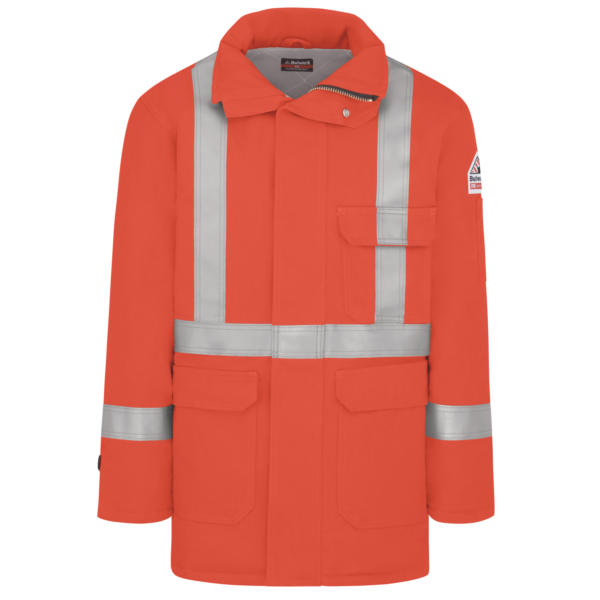
Develop a heavyweight insulated work parka for cold-store crews, loading-bay teams, and outdoor transfers, with configurable visibility trim, weather barriers, storage, fit, and private-label presentation.
Develop OEM Cold-Weather Workwear Parkas with Veelianpro
Develop this heavyweight insulated cold-store parka around your warmth, fit, weather-barrier, and reflective-trim priorities. Confirm layering and duty conditions first; MOQ starts from 100 pieces per style and color, conditional on approved requirements.
Define the Workwear Brief
This OEM development platform suits cold-storage teams, warehouse operators, distribution crews, and personnel moving between controlled cold areas, vehicles, loading bays, and outdoor transfer points. It begins as a long insulated work-parka direction, with coverage, shell build, mobility, storage, and trim layout tailored to the work cycle.
Define the lowest working range, exposure duration, activity level, transitions, and planned layers. These choices guide body length, ease, insulation placement, collar, cuffs, and weather barriers. Select a relaxed, regular, or extended-length fit with grading for the workforce.
Specify shell, lining, insulation, reinforcements, and trims for regular use. Options include a two-way closure, covered storm flap, stand collar, storm cuffs, adjustable tabs, hood, action-back shaping, and task-led pockets. Place optional reflective trim on front, back, sleeves, or X-back. Veelianpro supports fabric and trim sourcing, decoration, labels, grading, and packing. For protective requirements, specify target standards and testing before final claims.
Match insulation and layering room to cold exposure, task intensity, shift duration, and transfers between chilled and outdoor areas.
Choose optional reflective trim for front, back, sleeves, or X-back zones according to site visibility needs and garment design.
Specify shell direction, storm flap, collar, cuffs, closure, and hood configuration for wind, moisture, and gloved operation.
Define any flame-resistant, arc, or visibility target early so the approved final style can follow the required testing plan.
Fabric, Fit and Construction Options
Select shell, lining, insulation, and trim options for cold exposure, moisture, abrasion, laundering, and comfort. Water repellency and wind resistance can be development targets; protective material selections follow the approved brief.
Specify fit with planned layering room and practical weather barriers. Options include a two-way closure, covered flap, stand collar, storm cuffs, adjustable tabs, hood, action back, and task-led storage for equipment and documents.
From Brief to Approved Sample
Provide work conditions, size chart, color direction, logo files, trim layout, pocket needs, packing rules, and target quantity. Review a development sample for fit, movement, coverage, access, workmanship, and approved components before bulk production.
- Brief Alignment Confirm work cycle, layering, fit, visibility layout, and performance targets.
- Material Selection Review shell, insulation, lining, trims, and weather-barrier options.
- Fit Sampling Develop patterns, grading, pockets, branding, and a functional sample.
- Final Approval Approve components, packing, and any required final-style testing.
What to Send for a Useful Quote
Work Environment Share exposure, shift duration, layering plan, and transfer conditions.
Design Requirements Confirm hood, closures, cuffs, pockets, trim, branding, and packing.
Performance Targets State required standards, test methods, and approval expectations.
OEM Cold-Weather Workwear Parkas Procurement FAQs
What cold-store temperature and layering system should we develop for?
Set insulation around your cold-store temperature, shift length, activity level, and intended underlayers. Confirm whether staff move between freezer rooms, loading bays, and vehicles, because these transitions influence shell comfort, body length, collar coverage, cuff sealing, mobility allowance, and the preferred hood configuration.
Should reflective trim cover front, back, sleeves, or form X-back?
Choose the trim layout according to traffic approach angles, lighting conditions, and site rules. Front-and-back placement may suit basic needs, while sleeve details or an X-back can improve recognition from additional directions. Confirm contrast colors, trim width, laundering expectations, and any finished-garment visibility testing required.
Should the parka have a detachable hard-hat-compatible hood?
Specify a detachable hood when workers alternate between sheltered and exposed tasks; an integrated hood may simplify routine use. Check hard-hat clearance, attachment security, peripheral vision, adjustment with gloves, collar overlap, and whether the hood needs insulation, lining, weather shielding, or separate packing for distribution.
Which closure and weather barriers should the parka include?
Consider a two-way front closure and covered storm flap where seated work, wind exposure, or frequent access makes them useful. Review zipper pull size for gloved hands, flap overlap, closure choice, stand-collar height, cuff comfort, and compatibility between the chosen shell, lining, insulation, and hood arrangement.
What pocket configuration supports scanners, radios, gloves, and hand warming?
Use task-led pocket mapping: secure chest or sleeve storage can suit radios and scanners, lower hand-warmer pockets support comfort, and cargo pockets should avoid snag risks. Confirm device dimensions, closure security, drainage needs, glove access, reinforcement zones, and whether protected inside storage is required for documents.
Which protective requirements must the approved final parka meet?
Define protective requirements before material approval, then validate the exact finished parka through the applicable testing program. Identify flame-resistant, arc, visibility, weather, or occupational targets, plus wear conditions and care method. Protective performance cannot be assumed from a reference design, components, trims, or preliminary material selections.
Discuss Your OEM Cold-Weather Workwear Parkas Program
Request a sourcing quote with quantities, size breakdown, colors, artwork, destination, packing needs, and required test targets. MOQ starts from 100 pieces per style and color, conditional on requirements.


Reviews
There are no reviews yet.