
MASCOT, Portwest, ProJob, Regatta Professional, and Veelianpro suit different workwear-buying routes: MASCOT is relevant when a work-shorts assortment and holster-pocket options matter; Portwest when a specified Action Shorts pocket configuration is the starting point; ProJob when task-oriented storage features shape the brief; Regatta Professional when stretch polycotton cargo shorts are being matched to a catalogue specification; and Veelianpro when the project begins with a custom or private-label cargo-shorts brief. The best cargo shorts manufacturers for a buyer are therefore the ones whose documented product scope fits the required route—not a universal ranking.
| Buyer situation | Most relevant starting point | What to compare before moving forward |
|---|---|---|
| New custom project | Veelianpro | Pocket layout, fabric, fit, reinforcement, branding, artwork, and size-set decisions |
| Catalogue specification matching | MASCOT, Portwest, ProJob, or Regatta Professional | Exact model, storage layout, waistband, fabric, seam details, and decoration area |
| Repeat procurement | The supplier already aligned to the approved specification | Current model details, approved sample reference, sizing, and decoration requirements |
Turn the brief into selection criteria
A cargo-short brief becomes useful when it separates the job to be done from the product name. “Cargo” can mean one side pocket, multiple storage zones, ruler storage, phone storage, or a different pocket architecture entirely. Start by listing the wearer’s tools, devices, access needs, and whether the garment must work with a belt, holster pockets, or a branded uniform program. That makes the pocket map a decision item rather than a visual preference.
Construction deserves the same discipline. Ask what seams, reinforcement locations, waistband behavior, and fabric hand are needed for the intended daily work. Catalogue pages may identify particular features, but the purchase decision should remain tied to the selected model and approved specification. A description of twin-stitched seams on one product, for example, is not a transfer of that feature to another style.
Branding is a separate design check. Logo placement can compete with pockets, seams, or utility zones, so artwork size and position should be reviewed against the actual selected garment. For a new custom project, the brief should describe the logo method and placement alongside the pocket and fit requirements. For catalogue matching, the buyer should first identify the precise model, then test the decoration layout against its working features.
Use these selection criteria in order:
- Define the wearer task and the required storage map.
- Identify material and construction preferences that affect day-to-day use.
- Decide whether the work is catalogue matching or a private-label development brief.
- Put branding, fit, and size-set approval into the sample discussion.
- Compare the final proposed item against the written brief, not against a generic cargo-shorts label.
Match the project before the supplier
| Decision factor | Catalogue-led matching question | Custom-development question |
|---|---|---|
| Product range | Does the exact listed model have the required short and pocket format? | Can the required silhouette be defined clearly enough for development? |
| Pockets | Which listed pockets serve tools, phone, ruler, or secured items? | Which pocket locations, closures, dimensions, and reinforcements belong in the brief? |
| Construction | Which stated seams, waist treatment, and fabric features are relevant to the chosen model? | Which seams, reinforcement points, fabric, fit, and waistband details need approval? |
| Branding | Where can artwork sit without disrupting the listed layout? | How will artwork, placement, and size-set approval be reviewed with the design? |
| Sampling | What exact catalogue model is being approved? | What sample, artwork, and size-set decisions must be signed off? |
For catalogue specification matching, shortlist the product first and use the supplier page as the evidence baseline. MASCOT’s shorts range, for instance, distinguishes options with and without holster pockets, while Portwest’s S889 names several pocket types. Those are useful clues for a structured comparison, not proof that either option meets every team’s tool-carrying needs.
For a new custom project, begin with the written brief rather than adapting requirements to the first catalogue image. Veelianpro’s cargo-shorts page frames pocket layout, fabric, fit, reinforcement, and branding as brief items, making it relevant where those decisions need to be discussed together. For repeat procurement, preserve the approved model or agreed custom specification as the reference point and focus the next inquiry on whether the requested order still matches it.
Evidence-based supplier review
MASCOT
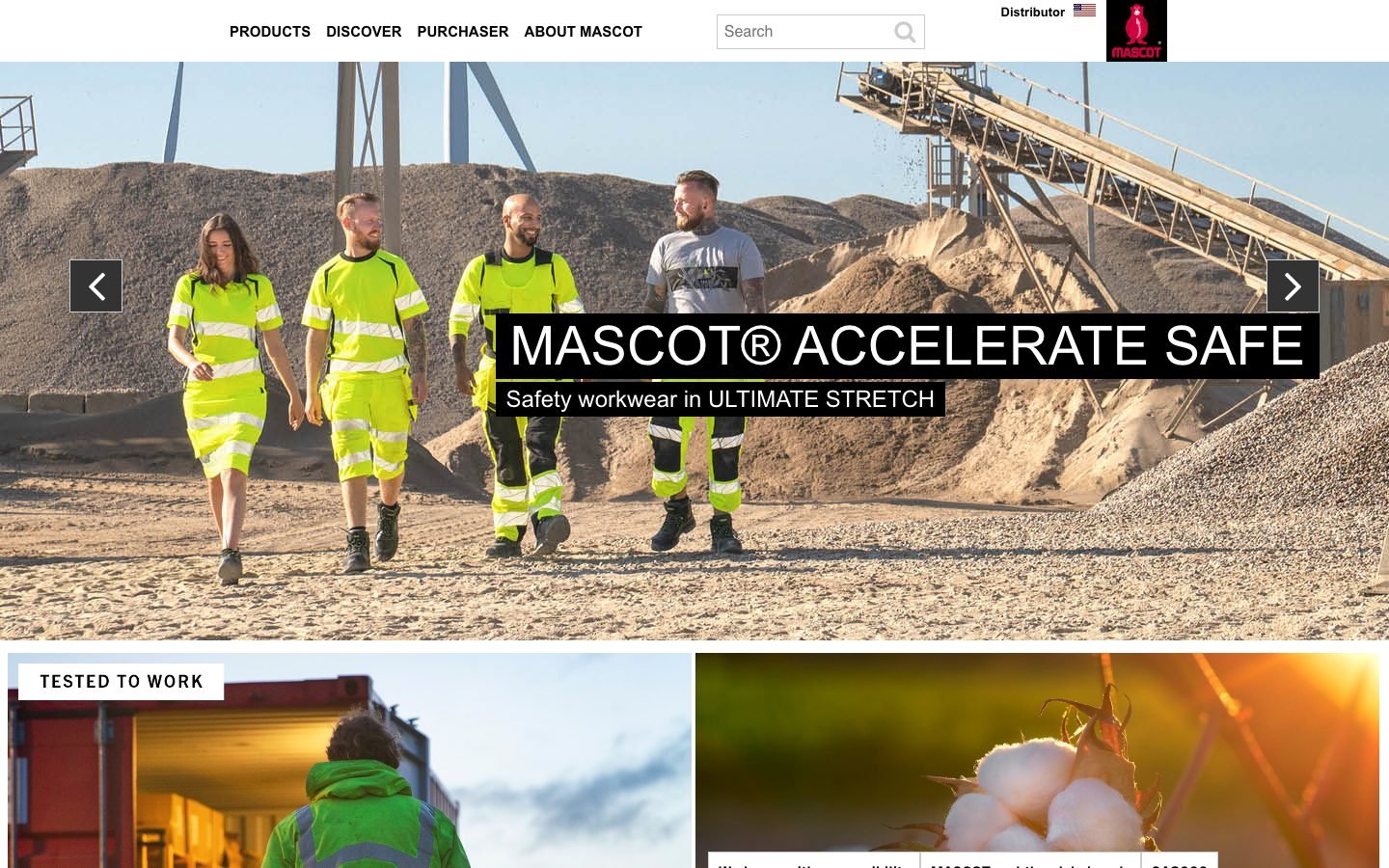
MASCOT’s official homepage is a practical catalogue starting point for a buyer comparing work-shorts formats before narrowing the specification. Its shorts catalogue presents work shorts with and without holster pockets, which is useful when tool-carrying capacity is a first-pass filter. The same category describes triple-stitched leg and crotch seams in its shorts assortment and discusses logo placement.
The upside is a clear route for a buyer who wants to screen a work-shorts assortment around holster-pocket choice, stated seam detail, and branding considerations. The operational trade-off is that the relevant decision remains model-specific: a purchaser should carry the chosen product reference into the inquiry rather than treat assortment-level language as a specification for every short.
RFQ checkpoint: identify the exact MASCOT short, state whether holster pockets are required, mark the planned logo position, and ask the supplier to align the quoted item with that selected configuration.
Portwest
Portwest’s official homepage fits a buyer who has a defined utility-pocket brief and wants to begin with a named catalogue model. The S889 Action Shorts page lists cargo, phone, zipped, and back pockets. It also describes a half-elasticated waist and twin-stitched seams.
That combination makes Portwest a sensible comparison point where separated storage zones matter: the buyer can map a phone, secured item, general cargo, and rear storage need to the listed layout. It is less useful to frame the page as a blanket solution for every workwear use case; the purchasing team should compare the exact pocket arrangement and waist treatment with its own wearer requirements.
Project fit: catalogue specification matching, especially when the RFQ can name S889 and distinguish which storage functions are essential from merely preferred. Include the target fit, the wearer’s device or tool needs, and the desired decoration location in the inquiry.
ProJob
ProJob’s official homepage is worth considering when the buying brief is driven by organised task storage. The 2505 Shorts page lists a zipped safety pocket, leg and phone pockets, and ruler storage. It also lists polycotton fabric, back pockets, and a front D-ring.
The strongest fit is a catalogue match where those particular storage elements correspond to how the wearer carries tools and devices. A buyer should not reduce the decision to the word “cargo”: a zipped safety pocket, ruler storage, and a D-ring each serve different working habits. The trade-off is a more detailed evaluation conversation, because the team needs to say which of those features is mandatory and which can change.
Questions to ask: Which exact 2505 configuration is being requested? Which item belongs in the zipped pocket, leg pocket, phone pocket, and ruler storage? Does the planned logo area conflict with any of those zones? Confirm the current model and destination-market specification as part of the inquiry.
Regatta Professional
Regatta Professional’s official homepage provides a focused catalogue option for a buyer matching a stretch-fabric cargo short. The TRJ388 Heroic Cargo Shorts page lists polycotton stretch fabric and a part-elasticated waist. It also lists a side cargo pocket, rear pockets and a ruler pocket. Separate construction details include a reinforced crotch seam and triple stitching.
| Decision factor | Evidence on the cited TRJ388 page | Buyer decision |
|---|---|---|
| Material and waist | Polycotton stretch fabric; part-elasticated waist | Compare against the required wearer movement and fit brief |
| Storage | Side cargo pocket, rear pockets, and ruler pocket | Check whether this layout covers the actual carry routine |
| Construction detail | Reinforced crotch seam and triple stitching | Review the stated seam locations on the selected model’s sample |
This is a strong matching route when a buyer can accept the stated pocket architecture and wants the fabric and waistband details to be part of the comparison. The constraint is equally clear: the source describes this model, so the RFQ should cite TRJ388 rather than request an undefined cargo short.
Veelianpro
Veelianpro’s official homepage and its Cargo Shorts page suit a project that starts with custom and private-label work cargo shorts development. The cargo-shorts page identifies pocket layout, fabric, fit, reinforcement, and branding as items reviewed in the project brief. It also places size-set and artwork approval among project decisions.
This route works when a buyer needs to turn a workwear concept into a sample-ready brief instead of selecting a named catalogue model. The key trade-off is that the quality of the outcome depends on the precision of the buyer’s input: “cargo shorts” is not enough on its own. The buyer should specify what each pocket must hold, where reinforcement is needed, how the logo should appear, and which fit reference the sample should follow.
Next action: send a concise development brief covering fabric, fit, pocket map, reinforcement points, branding artwork, target size set, and the approval sequence. The cargo-shorts name alone does not establish a protective rating, so any required protection-related specification should be stated separately in the inquiry.
Run the sample round
A sample round should resolve decisions that product-page language cannot settle for the buyer’s own program. For catalogue procurement, request review against the exact model reference, selected colour or variant where applicable, planned decoration position, and target size run. For a development project, turn the written brief into an approval checklist before artwork and size-set decisions are final.
Use this practical checklist:
- Confirm whether the project is a named catalogue match or custom/private-label development.
- Attach a pocket sketch or annotated reference showing each storage function.
- State fabric, fit, waistband, seam, and reinforcement expectations in plain language.
- Supply logo artwork and mark the intended placement on the garment view.
- Identify the sample reference and the person who approves fit, artwork, and size set.
- Record any change agreed during the sample review in the revised brief.
The purpose is not to force identical evaluation across suppliers. MASCOT may be assessed through holster-pocket choice, Portwest through the S889 storage map, ProJob through specialised storage features, Regatta Professional through the TRJ388 combination of stretch fabric and pockets, and Veelianpro through the completeness of a custom-development brief. That is the more useful way to compare cargo shorts manufacturers without implying that one supplier is objectively best for every program.
FAQ
How should a buyer choose between catalogue shorts and a custom project?
Choose a catalogue path when the exact listed model closely matches the required pocket layout, construction details, fit, and branding plan. Choose a custom/private-label brief when those elements need to be set together as project inputs. The relevant evidence is the named product page for a catalogue match or the custom-development scope described on the Veelianpro Cargo Shorts page.
What should an RFQ say about pockets?
Name what each pocket must carry and whether it needs a closure, easy access, secure storage, or reinforcement. Then compare that map with the cited product features: Portwest lists cargo, phone, zipped, and back pockets on S889, while ProJob lists a zipped safety pocket, leg and phone pockets, and ruler storage on 2505.
How should branding be handled on work cargo shorts?
Provide the artwork, desired position, and intended size, then review whether pockets and seams affect the placement. MASCOT’s shorts category discusses logo placement, while Veelianpro identifies branding and artwork approval as brief decisions.
Does a cargo-shorts listing establish protective performance?
No. Treat protection-related requirements as separate buyer specifications. The cited supplier pages here are used for the stated product, pocket, material, construction, branding, or project-brief details only.
Sources
- MASCOT Shorts
- Portwest S889 Action Shorts
- ProJob 2505 Shorts
- Regatta Professional TRJ388 Heroic Cargo Shorts
- Veelianpro Cargo Shorts
Inquiry template
Subject: Work Cargo Shorts RFQ — [Project Name]

Project route: [Catalogue model matching / Custom private-label development]

Buyer company: [Company]
Destination market: [Country/region]
Intended wearer and work use: [Describe]

Required style or reference: [Model number, link, sketch, or reference image]
Target fabric and feel: [Specify]
Fit and size range: [Specify]
Waist requirement: [Specify]

Pocket map:
- Cargo pocket: [Location, contents, closure]
- Phone pocket: [Location, contents, closure]
- Secure/zipped pocket: [Requirement]
- Ruler/tool storage: [Requirement]
- Other pockets or D-ring: [Requirement]

Construction and reinforcement requirements: [Specify]
Branding method, artwork, and placement: [Specify]
Sample reference to approve: [Specify]
Artwork approval contact: [Name/email]
Size-set approval contact: [Name/email]

Please confirm how the proposed item or development brief aligns with the requirements above and identify any points that need buyer approval before sampling.
