
Embroidery vs Screen Printing for Uniforms: Choose the Right Branding Method
Veelianpro is a Wuhan-based workwear manufacturer in China, helping buyers compare embroidery and screen printing by garment, branding, laundering, quantity, and project requirements.
Embroidery vs Screen Printing for Uniforms: Compare Supply Routes
Compare custom workwear development with off-the-shelf decorated uniform sourcing before requesting a quote. Starting MOQ is subject to fabric, certification and construction requirements.
← Swipe left or right to view →
Match Decoration to the Garment and Work Setting
Evaluate placement, fabric, artwork, construction, laundering, and order requirements before confirming decoration in your workwear development program.
Start With Logo Placement
Use embroidery for defined chest or sleeve branding; consider screen printing for larger back graphics when the garment supports it.
Match Fabric Structure
Review fabric weight, surface, stretch, and garment construction before selecting decoration for shirts, polos, jackets, vests, or pants.
Assess Artwork Complexity
Simple logos and text suit stitched decoration, while larger, multicolor, or highly detailed artwork may favor screen printing.
Plan For Wear And Care
Discuss daily abrasion, laundering conditions, and expected service life so decoration choices align with the uniform’s intended use.
Confirm During Sampling
Veelianpro can review branding alongside patterns, trims, construction, and samples before production quantities and private-label workwear details are finalized.
Where Embroidery, Printing, or Both Work Best
Match decoration methods to garment construction, visibility needs, wear conditions, branding placement, and the specific uniform program being developed.

Work Shirts
Work shirts can be developed in woven cotton blends, polyester blends, or project-selected fabrics with chest pockets, sleeve details, bartacks, and reinforced seams. Embroidery suits chest logos and name placement; screen printing can support larger back graphics or team identification.
Request a Workwear Quote
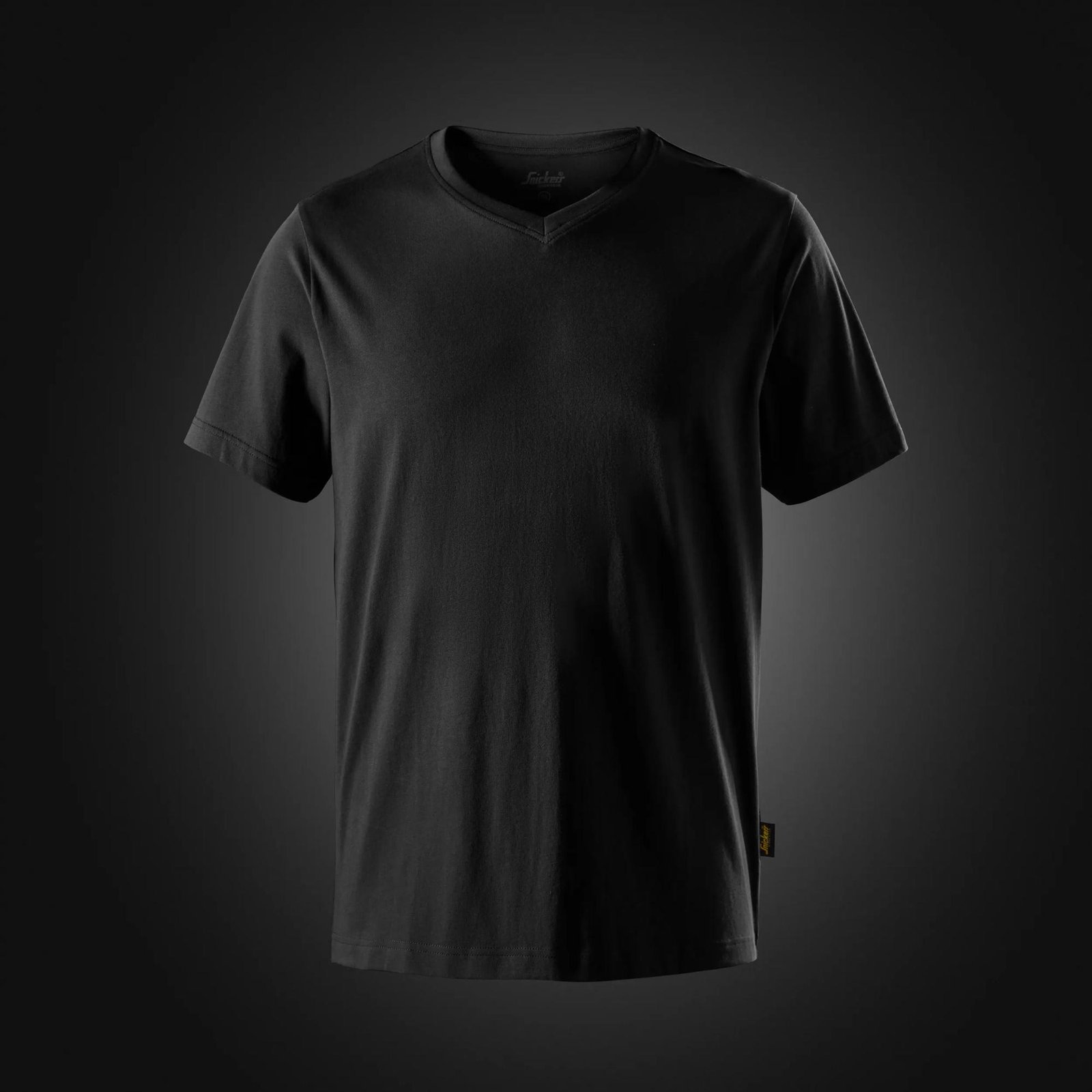
T-Shirts & Polos
T-shirts and polos provide flexible branding space for service teams, promotions, and everyday uniforms. Screen printing works well for broad logo artwork on tees, while embroidery is often selected for polo chests. Collar style, placket, sleeve trim, fabric, and labels can be customized.
Request a Workwear Quote
Work Jackets & Outerwear
Jackets, softshells, fleece styles, padded outerwear, and rain layers require decoration placement that respects seams, linings, insulation, and weather-protection construction. Embroidered chest or sleeve marks are common development choices; printed back graphics may suit selected shell fabrics and artwork requirements.
Request a Workwear Quote
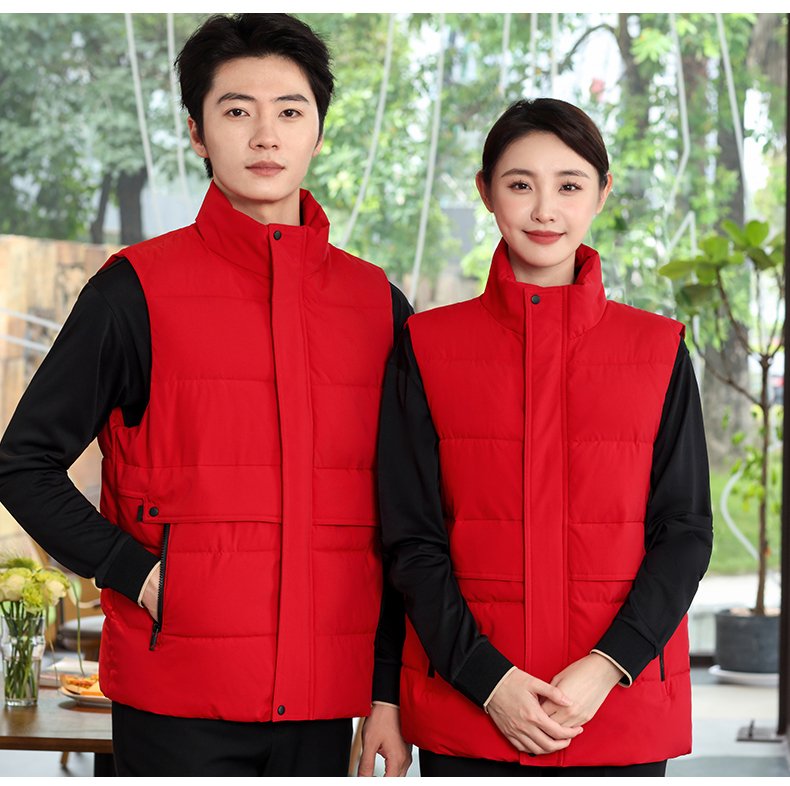
Work Vests & Bodywarmers
Utility vests, safety vests, and insulated bodywarmers can be specified with pocket layouts, closures, reflective elements, lining, and branding areas. Decoration planning should account for pocket access and reflective tape placement, using embroidery, printing, patches, or labels where the construction allows.
Request a Workwear Quote
Work Pants & Shorts
Work pants, cargo pants, and shorts are usually defined by pocket systems, reinforced knees, gussets, bartacks, and triple stitching. Branding is often more restrained than on tops, with patches, woven labels, or limited embroidery positioned away from high-abrasion zones.
Request a Workwear Quote
Coveralls & Bib Overalls
Coveralls and bib overalls offer continuous chest, back, and leg panels for program identification, alongside functional details such as tool pockets, adjustable straps, reinforced stress points, and closures. Decoration placement should be established during pattern development to avoid interfering with access or movement.
Request a Workwear Quote
Workwear Sets
Two-piece workwear sets coordinate shirts or jackets with trousers for a consistent site appearance. Buyers can align fabric, color blocking, pocket configurations, trim, labels, and logo treatment across both pieces, combining embroidered identifiers with printed graphics when the design calls for each.
Request a Workwear Quote
High-Visibility Workwear
High-visibility garments may include vests, shirts, jackets, trousers, and coveralls with project-specified colors and reflective tape layouts. Logo decoration must be planned around visibility elements. Any required standard, test scope, or certification must be reviewed for the exact garment and decoration configuration.
Request a Workwear Quote
Flame-Resistant & Arc-Rated Wear
Flame-resistant and arc-rated product development requires careful control of fabric, trims, construction, and requested protective standard. Embroidery, printing, patches, and labels must be evaluated for compatibility with the intended specification. Protective claims require SKU-specific test evidence and documentation.
Request a Workwear Quote
Chemical-Protective Clothing
Chemical-protective clothing can be developed around the intended work environment, garment format, closures, seam approach, and material requirements supplied by the buyer. Branding methods should be considered alongside the protective design target; chemical resistance or certification cannot be assumed without documented testing.
Request a Workwear Quote
Cold-Storage Workwear
Cold-storage apparel may include insulated jackets, trousers, coveralls, and layered components designed around the buyer’s working conditions. Quilting, lining, closures, cuffs, hoods, and pocket access affect construction. Logo placement should avoid bulky insulation zones and preserve practical wearability.
Request a Workwear Quote
Welding Workwear
Welding workwear is developed with the specified fabric, reinforcement, closure arrangement, pocket design, and coverage needs in mind. Chest embroidery, patches, or labels may be suitable depending on the construction. Any flame, heat, or protective performance claim requires the applicable test evidence.
Request a Workwear Quote
Medical & Cleanroom Wear
Medical and cleanroom programs can include scrubs, coats, tunics, trousers, and ESD-oriented garments based on the required environment. Buyers can specify fabric, color coding, pocket configuration, labels, and identification methods. Cleanroom or ESD performance must be tied to exact materials and documented requirements.
Request a Workwear Quote
Chef & Hospitality Uniforms
Chef and hospitality uniforms include chef coats, aprons, service shirts, polos, trousers, and front-of-house apparel. Embroidery is frequently used for chest logos or role identification, while printing can suit selected aprons or promotional garments. Fabric, closure, trim, and color details can be coordinated by venue.
Request a Workwear Quote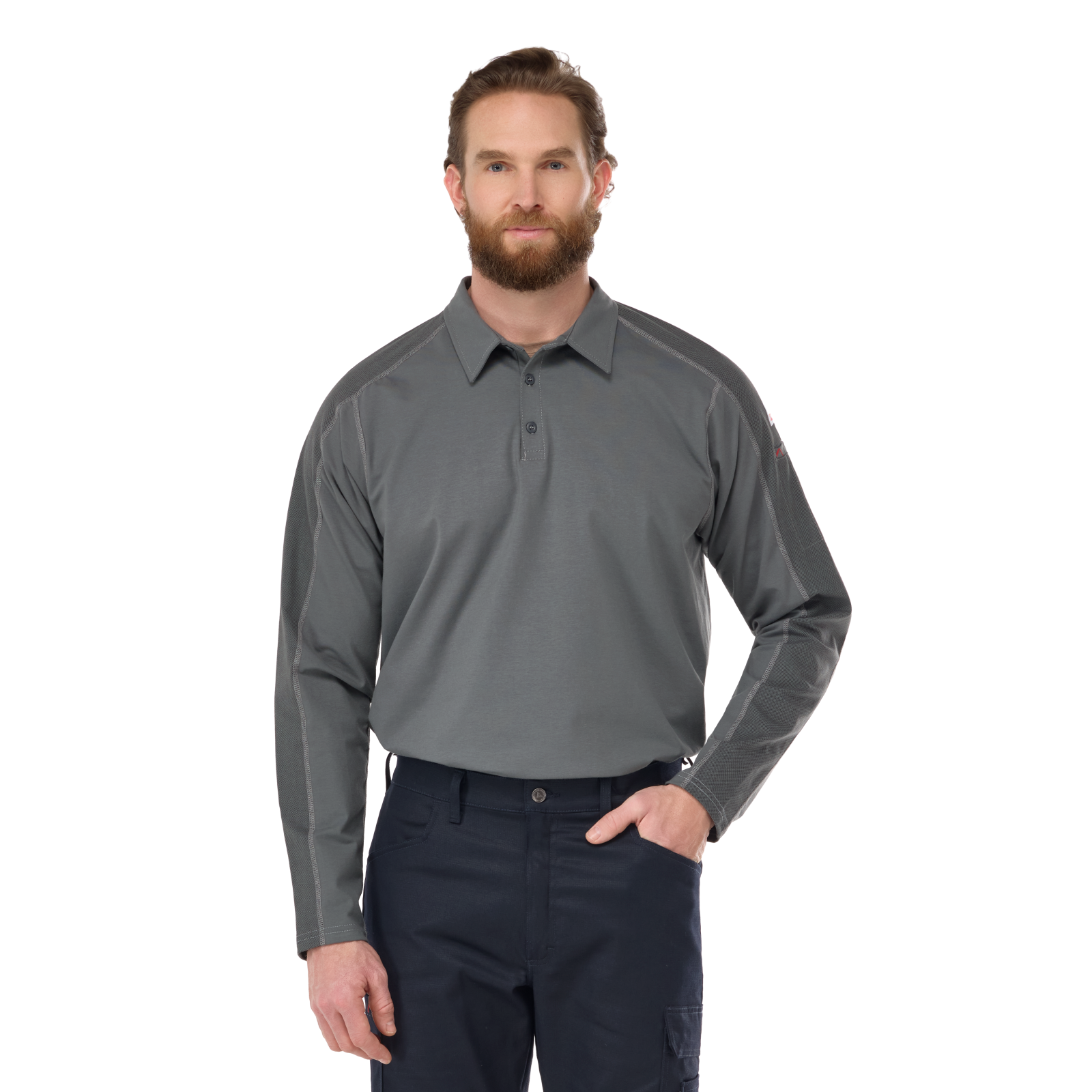
Industry Uniforms
Industry uniforms cover application-specific programs for industrial operations, logistics, maintenance, construction, service teams, and other work settings. Garment selection can combine shirts, polos, trousers, jackets, vests, and coveralls with shared colors, decoration standards, labels, and packaging for private-label or wholesale supply.
Request a Workwear Quote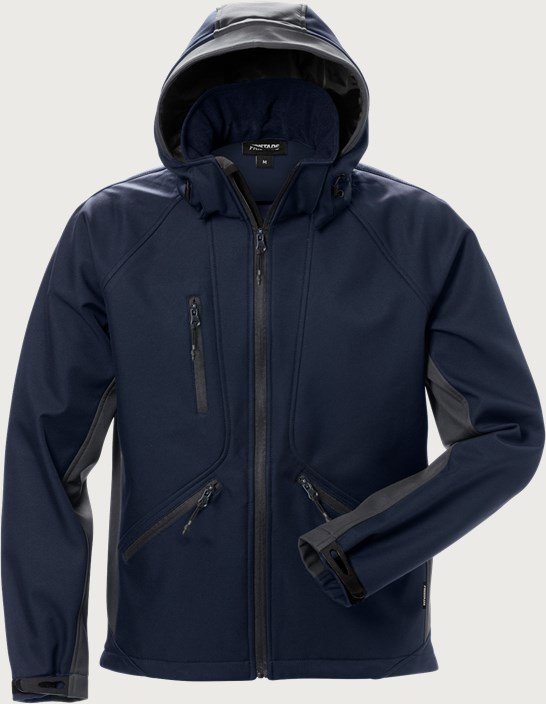
Base Layers & Accessories
Base layers and accessories can include thermal layers, caps, gloves, belts, neckwear, aprons, and other program components where applicable. Decoration choices depend on substrate and use: embroidered caps, woven labels, patches, or selected printing can extend a uniform identity beyond primary garments.
Request a Workwear QuoteFrom Decoration Choice to Production
Veelianpro turns your decoration decision into a production-ready uniform program. Share your garment, fabric, artwork, quantity, destination, timeline, and required standards. Our Wuhan team reviews feasibility, develops samples, and quotes OEM, ODM, private-label, or wholesale production from 100 pieces per style and color, subject to project requirements.
Share Project Inputs
Send the garment type, work setting, fabric target, size range, colors, logo files, decoration preference, quantity, destination, timeline, and applicable protection standard.
Review Artwork and Feasibility
Veelianpro reviews logo size, stitch or ink considerations, fabric compatibility, construction details, and certification requirements before recommending embroidery, screen printing, or a combination.
Develop and Sample
We coordinate tech-pack refinement, fabric and trim selection, pattern development, branding placement, and production samples so buyers can assess appearance, fit, and function.
Confirm and Produce
After approval, Veelianpro prepares the quotation, confirms order details, then manages cutting, sewing, decoration, inspection, packing, shipment, and reorder support.
Complete Guide to embroidery vs screen printing for uniforms
Use a practical framework to compare decoration methods, evaluate artwork and garment compatibility, assess supplier quote criteria, avoid costly production mistakes, and build a uniform program suited to industrial and service teams.
1. Embroidery vs Screen Printing for Uniforms Defined
Embroidery builds a logo from thread stitched into the garment, producing a raised, tactile finish; screen printing transfers ink through prepared mesh screens onto the fabric, producing a flat graphic. In uniform buying, this is not simply a premium-versus-budget choice: embroidery is commonly suited to compact marks on polos, jackets, and structured workwear, while printing can carry larger artwork across broad, smooth areas.
Artwork determines the practical limit. Dense small lettering, fine lines, and gradients may need simplification for stitching, whereas screen printing requires the artwork, color treatment, placement size, and screen setup to be defined. Both methods benefit from approval on the intended garment and location. [Alsco](https://alsco.com/resources/embroidery-vs-screen-printing-which-is-better)
For Veelianpro, match decoration to the garment, logo scale, visual finish, intended laundry routine, and order composition rather than selecting one method for every item. A program can use an embroidered chest identity on work polos or jackets and a printed back graphic where visibility matters. Request a quote with the logo file, garment style and fabric, placements, colors, size range, quantity, destination, and timeline. Veelianpro’s starting MOQ is 100 pieces per style and color, subject to fabric, certification, and construction requirements.
2. How Uniform Programs Use Both Methods
A compact embroidered chest mark and a larger printed graphic solve different visibility jobs within one uniform program. The stitched mark gives polos, jackets, and caps a consistent identity point at close range, while a screen-printed back, sleeve, or front graphic can make a team or role easier to identify at working distance. One brand system can therefore use different approved artwork versions for different garment areas and wearer tasks.
Role-based allocation is more useful than forcing one method onto every garment. Customer-facing supervisors may use embroidered polos or jackets, while installation, warehouse, promotional, or site teams may use printed tees where broad artwork is practical. Artwork should remain recognizable across treatments, but the embroidery version may need simplified lettering or shapes, while the printed version can carry a larger graphic. Review each choice against the garment, placement, and approved artwork before production.
3. Types of Embroidery vs Screen Printing for Uniforms
Embroidery builds the mark with raised thread; screen printing lays ink across the garment surface. For uniforms, the choice is less about one winner than matching artwork scale, placement, and the visual job each garment must perform.
| Treatment | Appearance | Best Coverage | Artwork Handling |
|---|---|---|---|
| Embroidery | Raised thread | Compact marks | Simplify fine detail |
| Spot-color screen print | Flat ink | Broad graphics | Retains bold shapes |
| Mixed program | Raised and flat | Chest plus back | Uses adapted artwork versions |
Suitable Embroidery Treatments
A compact left-chest logo, name, or simple emblem can use embroidery where dimensional thread supports a structured, professional appearance. Keep lettering and linework open enough to remain distinct after digitizing.
Embroidery concentrates coverage in a small area. It suits polos, jackets, vests, and other uniforms where a restrained identity mark is more useful than a broad graphic.
Spot-Color Screen Printing
Standard spot-color screen printing places flat ink in defined artwork areas. It is practical for bold logos, service messages, and clear symbols on tees, work shirts, or other smooth print areas.
Its flat finish preserves garment flexibility better than a large stitched field. Separate colors and placement sizes should be confirmed in the artwork proof.
Artwork That Needs Simplification
Fine type, tiny gaps, dense linework, and tonal transitions should not be forced into one decoration file. Simplify an embroidery version into solid shapes and readable type; retain finer detail in the screen-print version.
Use adapted artwork when the same identity appears on a small chest mark and a large back graphic. Consistent logo structure and approved colors can unite versions without demanding identical reproduction.
Large-Area Graphics
Large back graphics and high-visibility messaging are generally better expressed as screen print because ink can cover a broad, flat area without building a heavy stitched surface. Avoid treating a large illustration as an enlarged chest embroidery file.
A worked example: use an embroidered chest emblem with a screen-printed back service identifier, subject to garment and artwork review.
Mixed-Decoration Programs
A mixed program assigns each treatment a role: raised thread for compact identification and flat ink for distance visibility or broad artwork. Veelianpro can review embroidery, screen printing, heat transfer, patches, and labels within the garment-development discussion.
For a useful feasibility review, provide the garment style, fabric direction, artwork files, placements, quantity by style and color, and any required certification scope.
4. Embroidery vs Screen Printing for Uniform Materials
Material behavior changes both the visual result and the production risk. Before selecting embroidery vs screen printing for uniforms, match the artwork, garment surface, seam layout, and intended placement—not just the garment category.
| Garment surface and use | Decoration consideration | Likely risk | Practical remedy |
|---|---|---|---|
| Smooth tee or polo panel | Screen print favors broad flat artwork | Uneven result across seams | Keep artwork within one uninterrupted panel |
| Woven work shirt chest | Compact embroidery or print depends on logo detail | Pocket or placket interference | Confirm a clear placement zone on the sample |
| Structured jacket or cap | Embroidery suits small simplified marks | Restricted backing or access | Review construction and decoration access first |
| Stretch or textured uniform | Test both methods on the actual surface | Distortion or lost detail | Simplify artwork and approve a sample |
Smooth Knits And Wovens
Smooth polo knits, tees, and flat woven shirt panels give screen prints a continuous contact area. Compact embroidery can also work when the logo has simplified lettering and the panel remains stable during stitching.
Structured Outerwear And Caps
Jackets, fleece, caps, and other structured pieces often suit a compact embroidered mark because the construction can visually support raised thread. Check access to the decoration area before approval; linings, pockets, panels, and cap structure can limit clean placement.
Stretch, Texture, And Color
Stretchy or heavily textured surfaces can distort a print or make small stitched details uneven. Dark garment colors may require a print plan that preserves artwork visibility, while thread selection should be reviewed against the actual garment color under production lighting.
Placement And Reinforcement

A chest pocket, zipper path, seam, or reinforced panel can interrupt either method. Submit the garment view and logo dimensions together so Veelianpro can assess placement during sampling rather than after bulk cutting.
5. Artwork, Placement, and Finishing Options
Artwork must be reviewed at the intended finished size and on the actual uniform panel. The same logo can need different preparation for thread and ink, especially when readability, coverage, and placement change.
| Artwork Or Placement | Embroidery Review | Screen-Print Review |
|---|---|---|
| Small chest logo | Check stitch density and tiny lettering | Check line clarity and color separation |
| Sleeve mark | Avoid seams and thick reinforcement zones | Avoid seams, tape, and stretch-prone panels |
| Large back graphic | Review bulk, stiffness, and coverage | Review coverage, separations, and panel obstructions |
Prepare The Logo File
Provide vector artwork where available, plus approved brand colors and the intended garment placements. Embroidery needs a digitized stitch plan; screen printing needs separations suited to the artwork.
Gradients, tiny text, dense fills, and fine outlines need method-specific review before sampling. Simplifying a stitched version can preserve legibility without changing the printed back artwork.
Choose Thread Or Ink Colors
Thread creates a textured color surface, while ink creates a flatter graphic surface. Match from approved physical or digital color references, then review a proof because thread sheen and fabric color can alter perception.
Avoid assuming an ink color has an identical thread equivalent. Keep the approved logo color list with the tech pack for every uniform style.
Plan Chest And Sleeve Marks
A left-chest mark suits compact identification on polos, work shirts, softshells, and jackets. Sleeve placement can support a department, partner, or flag mark when it does not interfere with seams, pockets, reflective tape, or adjustment tabs.
Specify the placement from a stable garment reference point, not only from an image edge. This makes grading and repeat orders easier to control.
Use Back Graphics Purposefully
Back graphics provide distance visibility on tees, vests, and outer layers with a broad, relatively flat panel. Large embroidery can add bulk and stiffness, so large coverage requires a fabric-and-construction review.
Screen printing lets the graphic remain visually broad without converting the whole area into stitched fill. Confirm that the artwork avoids pockets, seams, ventilation panels, and reflective elements.
Combine Methods In One Program
Illustrative worked example: a service team polo uses one compact embroidered left-chest mark, while a matching tee carries a screen-printed back service graphic. The artwork system shares approved colors, but each file is prepared for its decoration method.
Veelianpro can review garment type, artwork, placements, fabric, and construction during development. The buyer should define acceptance criteria for logo legibility, placement tolerance, color reference, and the sample approval point.
6. Quality Factors That Affect Wear and Washing
Decoration problems can arise at the interface between the chosen method, fabric, placement, and laundering routine. Approve the decoration on the actual uniform fabric and placement area, since a polo chest can behave differently from a stretch tee or padded jacket panel. [Alsco](https://alsco.com/resources/embroidery-vs-screen-printing-which-is-better)
| Check Point | Embroidery Concern | Screen Print Concern |
|---|---|---|
| After washing | Puckering or snagging | Cracking, fading, or lifting |
| During wear | Dense, uncomfortable area | Heavy or poorly adhered ink |
| At small scale | Unreadable lettering | Broken fine lines |
Stitch Density And Stabilizing
Over-dense stitches can pull lightweight or stretch fabric into puckering; inadequate backing can let the logo shift or distort. Review the sewn sample flat and worn, checking that the stabilizer, density, and tension suit the fabric.
Dense stitching also creates more surface loops that may snag. Simplifying fills, adjusting stitch direction, or changing placement may reduce bulk when the sample shows a concern.
Thread Coverage And Edge Clarity
Small lettering can close up when thread coverage overwhelms narrow counters and gaps. Inspect letters at intended viewing distance, plus loose ends, exposed backing, and uneven edges before bulk approval.
If details are unreadable, revise the embroidery file or enlarge and simplify the mark; do not approve from artwork alone.
Ink Coverage And Curing
A screen print should cover consistently without pinholes, weak edges, or an overly heavy hand. Poor adhesion may show as lifting, cracking, or fading after the agreed wash evaluation.
Inspect the approved print on the selected fabric for edge definition, stretch response, and surface feel. Cure settings and ink selection require confirmation for the actual garment composition.
Proof And Sample Inspection
Use a production-representative sample to check logo size, placement, thread or ink colors, garment distortion, and comfort. Veelianpro can develop samples before production; record the approved sample version, artwork revision, and any agreed inspection criteria in the order reference.
- Compare left and right placement consistency
- Check decoration inside and outside the garment
- Record approved artwork revision and color references
7. Choosing a Uniform Decoration Manufacturer
A capable decoration manufacturer evaluates the complete uniform program, not a logo in isolation. Compare how artwork, garment construction, approval controls, quote inputs, and reorders will work together before releasing production.
| Review Area | Buyer Input | Production Reference |
|---|---|---|
| Garment fit | Style and work setting | Fabric, construction, placement |
| Artwork | Master logo and method | Approved decoration version |
| Reorder | SKU changes and quantity | Prior approved specification |
Assess Garment Program Fit

Share each garment type, work setting, placement, fabric direction, size range, and colorway. Veelianpro can develop workwear from a tech pack, sketch, sample, or product idea, including fabric and trim sourcing, pattern development, sewing, reinforcement, and decoration.
Review Artwork Before Production
Provide the master logo and identify which version is intended for embroidery, screen printing, or both. Confirm placement, approximate finished size, thread or print colors, and whether small lettering or detailed shapes require simplification.
Use A Controlled Sample Workflow
Approve the garment sample and decoration treatment together; a logo can behave differently on a polo, jacket, vest, or coverall. Record approved artwork, placement, colors, construction details, labels, and packing requirements as the production reference.
Compare Quote Scope
Request a quote that separates garment development, decoration, labels, packaging, inspection, and export coordination where applicable. Ask the quotation to identify the MOQ basis, sample scope, artwork setup, production assumptions, and timing assumptions for the specific program.
Plan Repeat-Order Communication
Keep an approved specification file for each SKU and report any fabric, trim, artwork, size, destination, or timeline change before reordering. Veelianpro supports reorder discussions after shipment, so the original production reference remains useful rather than relying on verbal recall.
8. Common Uniform Decoration Buying Mistakes
Decoration failures usually surface after garments are issued, when rework disrupts staff appearance and replenishment. Compare the logo, garment construction, work routine, and approval sample together before locking an order.
Chasing Unit Price
A lower unit figure can exclude artwork preparation, decoration setup, or garment details required for the job. That creates an incomplete comparison rather than a cheaper program.
Request matched quote inputs: garment, fabric, placement, artwork treatment, quantity, packing, destination, sample scope, and inspection requirements. Confirm the MOQ and feasibility for the exact fabric, certification, and construction requested.
Sending Unsuitable Artwork
Fine lettering, dense detail, and gradients can lose clarity when converted to thread; oversized stitched coverage can also stiffen the garment. A file that looks good on screen is not automatically production-ready.
Provide editable artwork where available and identify intended decoration size. Ask for embroidery digitizing review or a screen-print color and separation review before approval.
Ignoring Garment And Placement
A chest pocket, zipper, seam, reflective tape, or padded panel can interrupt stitching or a print area. The result may be distorted branding or a placement that interferes with garment function.
Mark placement on the actual style drawing, including measurements from fixed garment features. Review each garment family separately rather than copying one location across all items.
Overlooking Wash Conditions
Frequent laundering, abrasion, and heat exposure affect decoration selection and care instructions. A visual choice made for occasional wear may not suit daily service or industrial uniforms.
State the cleaning routine, expected wear setting, and any protective-performance requirements during feasibility review. Keep unsupported wash-life or protection claims out of the product specification.
Approving Without Representative Proof
A digital layout may not reveal thread density, small-text legibility, ink coverage, or how decoration sits on a constructed garment. Production can then repeat an avoidable mismatch across the run.
Approve a representative proof showing the actual garment, placement, scale, colors, and decoration method. Record approved changes in the tech pack or order confirmation.
Treating Every Role Alike
Front-desk polos, field tees, outerwear, and safety layers have different visibility, comfort, and placement needs. One decoration method across every role can compromise either branding or usability.
Illustrative procurement scenario: A safety distributor needs one recognizable identity across polos, jackets, and work tees, but a large stitched back design would be unsuitable for the tee program. The proposed solution is a compact embroidered chest mark on polos and jackets plus a screen-printed back graphic on tees. Before sampling, the distributor’s acceptance criteria are readable logos at the approved sizes, placements clear of pockets and seams, and approved artwork versions for each method.
9. Launching a Mixed Uniform Program
A mixed program assigns each garment and decoration to the job it must do. Set the role matrix before requesting samples so a polished chest mark and a high-visibility back graphic are evaluated as separate specifications.
Define Roles And Garments
List wearer roles, work setting, garment type, color, and quantity by size. For example, separate customer-facing polos from field tees, jackets, vests, or coveralls rather than applying one decoration plan to every item.
- Role and garment type
- Color and quantity by size
- Work setting and laundry conditions
Prepare Artwork Packages
Supply the approved logo version for each placement, plus the source vector file where available. Identify whether the chest artwork is simplified for stitching and whether the back graphic retains print-only fine detail or gradients.
- Artwork version and revision date
- Thread or print color references
- Placement dimensions and location
Specify Placement By Garment
Match compact left-chest branding to the garment’s construction, while reserving broad, flat back areas for screen-printed graphics where appropriate. Note pockets, seams, reflective tape, zippers, and reinforcement panels that can constrain placement.
- Left chest logo
- Back identification graphic
- Sleeve or leg marking
Scope Quote And Sample Approval
Request a scoped quote with garment quantities by style and color, decoration method, placement sizes, destination, deadline, and required acceptance criteria. Confirm feasibility, MOQ, and timing in the individual quotation because fabric, certification, and construction requirements can affect all three.
Approve a sample against logo legibility, placement, garment construction, and stated laundry conditions before production. A deadline is a planning input, not a delivery promise until confirmed.
- Garment and decoration breakdown
- Artwork and placement approvals
- Inspection and acceptance criteria
Build Repeat-Order Records
Keep the approved tech pack, size grading, color references, artwork files, digitizing or screen details, sample notes, packing requirements, and purchase-order history together. This record lets a reorder begin from an identified approved version instead of memory.
10. Embroidery vs Screen Printing for Uniforms Cost Drivers
Embroidery and screen printing are quoted from different production inputs: embroidery follows digitized stitch execution, while screen printing follows separated artwork, screens, colors, and print runs. A low-color chest mark and a broad multicolor back graphic can therefore reverse the expected cost relationship.
Compare the complete program—garments, each placement, sampling, packing, and export coordination—not decoration unit cost alone. The quotation should state what is included, identify any setup assumptions, and specify what may be retained for a repeat order.
| Cost Driver | Embroidery: What Changes Cost | Screen Printing: What Changes Cost | Quote Must Specify |
|---|---|---|---|
| Artwork preparation | Digitizing, stitch count, small-detail cleanup, and design density | Color separation, screen preparation, and artwork cleanup | Approved artwork, method-specific proof, and setup treatment |
| Decoration area and surface | Larger or denser stitching; seams, pockets, and structured surfaces | Print area, ink coverage, garment color, and flat accessible surface | Exact dimensions, placement map, garment style, and color |
| Quantity and placements | Machine time per piece multiplies across chest, sleeve, or back placements | Setup is distributed across the run; each additional placement requires production steps | Piece count by size/color and every decoration location |
| Sampling and repeat orders | Sample approval and whether the digitized file remains usable | Sample approval and whether approved separations/screens can be reused | Sample scope, approval point, retained files, and repeat-order conditions |
| Hypothetical worked example | A compact embroidered left-chest logo on polos is priced from its approved digitized design and stitch density | A large back print on tees is priced from approved colors, screens, coverage, and run quantity | Request both configurations without assumed prices, lead times, or identical garment surfaces |

Workwear Fabrics Selected for the Job




Custom Workwear Manufacturer Processes for Branding and Durability



Functional Trims and Brand Accessories


Documentation to Review for Custom Workwear


Uniform Decoration Buyer FAQs
Get practical guidance on decoration, garment compatibility, durability, sampling, MOQ and production planning for custom uniform programs.
Is embroidery or screen printing better for logos, and how does embroidery vs screen printing for uniforms affect brand presentation?
Which is more durable for embroidery vs screen printing for uniforms that are washed frequently?
Which fabrics work best for embroidery vs screen printing for uniforms?
Can I use both embroidery and screen printing in one uniform program?
How do logo size, color count and artwork detail affect the choice between embroidery vs screen printing for uniforms?
How long does embroidery vs screen printing for uniforms take?
What is the MOQ for custom embroidery or screen printing uniforms, and can I request samples first?
Plan Your Custom Uniform Program
Share your garment, work setting, fabric, branding method, quantity, destination, timeline, and required protection evidence. Contact info@veelianpro.com or WhatsApp +86 139 8615 2456 for a practical review.