
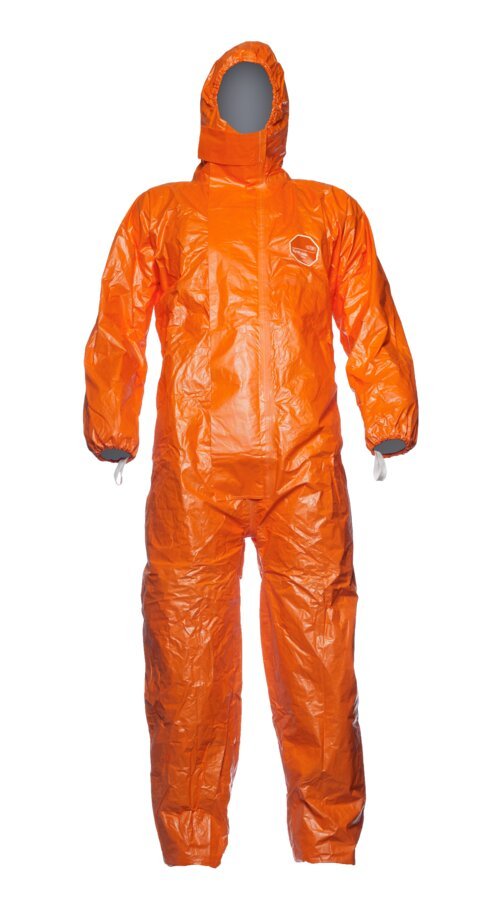
Develop a hooded, seam-sealed chemical protective coverall with controlled closure coverage, elasticated interfaces, and movement-stable sleeves for buyers defining splash, spray, particulate, or contamination-control work processes during daily operations.
Develop Chemical Protective Coveralls with Veelianpro
Source a private-label hooded chemical protective coverall configured around your hazard assessment. Specify a covered front closure and exposure-critical sealed seams, then confirm hood-to-respirator fit, sizing, labels, and packing through sampling. MOQ starts from 100 pieces per style and color, conditional on material, construction, and packaging requirements.
Define the Workwear Brief
This development concept suits procurement teams seeking a disposable or limited-use coverall platform for controlled industrial tasks. Choose the intended wear mode after reviewing site procedures. The specification can include a close-fitting hood, face opening adjustment, wrist and ankle containment, and brand-ready visual details while leaving protective performance to testing.
Provide chemical names, concentrations, physical states, contact duration, and spray conditions for material and seam validation.
Confirm respirator model, face opening geometry, and hood overlap needed to evaluate secure movement during sample fitting.
Specify covered front closure, chin seal, and exposure-critical seam locations to develop sealing targets for the work process.
Set size range, underlayer allowance, elasticated openings, thumb loops, boot interface, labels, and individual packing requirements.
Fabric, Fit and Construction Options
Select a barrier-material system only after the buyer supplies chemicals, concentration, physical state, contact duration, pressure conditions, and disposal workflow. We can source candidate coated, laminated, or film-based materials for evaluation. Material selection should also consider drape, noise, strength, static-control needs, visibility color, and compatibility with the required seam-sealing process. Final barrier and protective performance requires validation on the approved garment.
Build the one-piece coverall with an integral hood, front zip, and cover flap as required by the exposure map. Options include taped or sealed seam allowances, a chin closure panel, elasticated face, waist, cuffs, and ankles, plus thumb loops to help retain sleeve position. Confirm boot overlap, respirator interface, range of motion, and closure handling during task-based wear trials.
From Brief to Approved Sample
Begin with a technical pack covering hazard scenario, design sketch, size chart, seam map, closure layout, trim preferences, artwork, labels, and packing. We develop pattern and fit samples, source fabrics and trims, and review hood, cuff, ankle, and movement details with your team. Use the approved sample to define laboratory testing targets, quality checkpoints, and production documentation.
- Hazard Review Confirm chemicals exposure conditions and required validation targets before sampling
- Pattern Planning Set size range underlayer allowance mobility and hood interface needs
- Sample Build Develop closure seam and finish options for buyer review
- Wear Assessment Review fit movement and task compatibility before approved style validation
What to Send for a Useful Quote
Hazard Details Share chemicals concentrations exposure duration and physical state requirements
Design Requirements Confirm hood closure seams cuffs ankles and boot interfaces
Branding Pack Provide logo artwork label language color and packing preferences
Chemical Protective Coveralls Procurement FAQs
Which chemical exposures must the approved coverall be evaluated against?
Evaluate it against the buyer’s named chemicals, concentrations, physical states, contact duration, and possible pressure or spray conditions. Provide the hazard assessment before material selection, then confirm the intended barrier material, seam system, closure design, and test plan for the exact approved production style.
Does the work process require a hood checked with respirators?
Yes, develop the hood around the specified respiratory equipment and review the interface during sampling. Check face-opening geometry, elastic tension, visibility, head movement, chin coverage, and donning sequence. Final compatibility must be assessed on the complete approved ensemble, not from garment dimensions alone.
Which seams and closure areas need sealed construction?
Specify sealed seams wherever the task’s exposure pattern and movement make stitching vulnerable, with attention to the hood, crotch, underarm, front opening and transitions. A covered front closure and chin seal can be developed as options; validate seam integrity and closure performance on the finished style.
Do thumb loops and elasticated finishes suit your process?
Use thumb loops and elasticated wrist, waist, face and ankle finishes when they help hold the garment in position through the task. During wear trials, assess reach, crouching, glove overlap, boot interface, circulation comfort and removal. Choose these details according to workflow and required protective validation.
Will the coverall be single-use or limited-use?
Decide the use category from the site’s contamination-control procedure, exposure assessment and disposal route. We can develop a coverall for the selected work process, but the buyer should define reuse limits, decontamination rules, doffing procedure and waste handling before sample approval and worker training.
Which sizing, branding and packing details belong in sampling?
Confirm the full size range, grading, underlayer allowance, label languages, logo treatment, care or use instructions, barcode needs and individual packing format in the tech pack. Fit samples should be reviewed in representative movements before bulk approval. MOQ starts from 100 pieces per style and color, subject to requirements.
Discuss Your Chemical Protective Coveralls Program
Send your hazard details, target construction, sizing, branding, and packing needs; we will prepare a development path and quotation for your review.



Reviews
There are no reviews yet.