
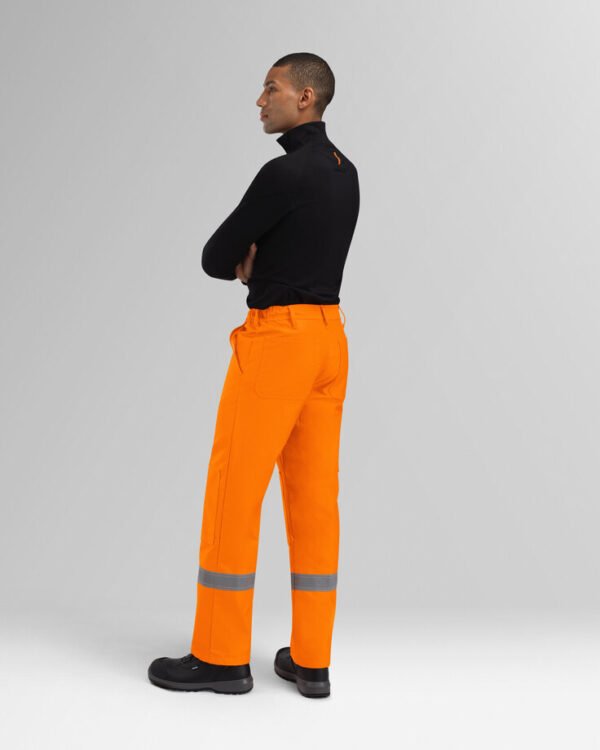



Develop private-label industrial trousers with adjustable waist comfort, concealed fly closure, utility storage, knee-pad access and reflective leg detailing.
Develop Industrial Work Trousers with Veelianpro
Custom Industrial Trousers with Visibility Detailing can be OEM or private-label developed from your brief, including knee-pad pocket placement; MOQ starts from 100 pieces per style and color, conditional on requirements.
Define the Workwear Brief
This utility-led concept uses front and rear storage, a tool pocket, belt loops, elasticated waist, concealed fly, knee-pad pockets and leg visibility detailing. Adapt pockets, reinforcement, inseams and trim placement to daily tasks.
Start with the work environment, climate, movement demands and daily tasks. Identify whether the approved final trouser needs a tested flame, heat, electrostatic, arc or visibility outcome. These requirements influence material, trim, construction and validation planning, so they should be confirmed before fabric approval and prototype sampling.
Choose a regular or relaxed trouser block based on wearer movement, layering and task posture. Define waist adjustment, rise, leg shape, inseam options and the graded size range. A representative fit review during sampling helps refine waistband comfort, knee placement and mobility before the production specification is approved.
List the tools, devices and personal items crews need to carry, then assign the appropriate front, rear, tool, cargo or secure-device pocket. Confirm pocket depth, opening direction, closure level, reinforcement and access while standing, kneeling or climbing. Prototype loading checks can guide adjustments without compromising wearer movement.
Specify the knee-pad format, insertion access and retention approach before building the knee pocket. Add reinforcement zones where repeated kneeling or abrasion is expected, while preserving comfortable articulation. Reflective trim may be placed around the lower leg as a design option; any required visibility performance must be tested on the approved style.
Fabric, Fit and Construction Options
Choose fabric for climate, abrasion, comfort, mobility and care. Source durable woven cotton-rich, polyester-cotton or specified specialty constructions with approved pocketing, thread, closures and reflective trim.
Specify waistband elasticity and belt loops, with front, rear and tool pockets designed for secure access. Knee-pad pockets, reinforcement panels, bar tacks and leg trim support movement.
From Brief to Approved Sample
Share intended use and technical brief. We align measurements, grading, pockets, trim, branding and packing before sampling, then review fit, mobility and workmanship.
- Brief Review Confirm end use, fit, pockets, colors, branding and performance targets.
- Material Development Review fabric, trims, closures and reflective-detail options for approval.
- Pattern and Sample Develop the block, graded sizing, prototype and construction revisions.
- Validation Planning Align testing targets, care instructions, labels and packing before bulk approval.
What to Send for a Useful Quote
Use Environment Share job conditions, climate, movement needs and any performance targets.
Sizing Requirements Provide size range, measurements, fit preferences, grading and inseam needs.
Branding and Packing Send artwork, label content, decoration placement and packing requirements.
Industrial Work Trousers Procurement FAQs
What protective targets should the approved trouser meet?
Start with job hazards and performance targets for the approved style. We can develop pocket layouts, concealed closures, knee-pad access and reflective trim to your brief. Any flame, heat, electrostatic, arc or visibility claim requires testing for the exact approved construction before production.
Which fit block and sizing options suit your workforce?
Choose a regular or relaxed block after reviewing wearer movement, layered clothing and task posture. Confirm waist increments, inseam choices, rise, leg shape and full grading before sampling. A representative wearer fitting can refine mobility, waistband comfort and knee-pocket position before production approval.
Which pocket layout will securely carry required tools?
Specify every item the trousers must carry, then assign front, rear, tool, cargo or device pockets accordingly. Confirm opening direction, closure method, pocket depth, reinforcement and access while kneeling or climbing. Sample loading checks help verify stable storage without unnecessarily restricting wearer movement.
How should knee-pad pockets and reinforcements be developed?
Select the intended pad shape first, then develop matched pocket dimensions and insertion access. Reinforcement panels can address frequent kneeling, while articulation and seam placement should preserve movement. Confirm pad retention, compatibility, wash behavior and wearer comfort through physical samples before approving bulk construction.
What material direction fits your climate and care needs?
Choose fabric and trims around climate, abrasion exposure, comfort and the intended care routine. Review hand feel, color direction, shrinkage control, pocketing and closure durability during sourcing. Where protective performance is required, establish validation targets early and test the final approved construction.
Where should branding, labels and packing details appear?
Map logo, label and packing requirements onto the approved technical drawing before sampling. Options include waistband labels, internal care labels, pocket-area decoration, hangtags, polybags and carton marks. Confirm decoration method, artwork size, color references, placement tolerances and packing count during sample approval.
Discuss Your Industrial Work Trousers Program
Request a development quote with quantity, colorways, size range, fabric direction, pocket plan, branding, packaging and testing objectives. MOQ starts from 100 pieces per style and color, subject to requirements.




Reviews
There are no reviews yet.