BOWINS Garment fits buyers developing a specification from samples or a design brief; Cintas fits organizations that want managed workwear laundering, delivery and consultation; MASCOT suits teams sourcing workwear alongside safety footwear and accessories; Model Apparel centers on controlled employee ordering through a private company store; and Veelianpro is oriented to custom industrial workwear with OEM, ODM and private-label options. The best choice is therefore the one whose operating model matches your buying situation—not a universal winner.
| Buying situation | Supplier match | Why it belongs on the shortlist |
|---|---|---|
| A new garment specification needs development and sample approval | BOWINS Garment | Its OEM/ODM model describes technical-package development and buyer approval before bulk production. Official homepage |
| Workwear needs ongoing laundering and delivery | Cintas | Its site describes workwear laundering, delivery and uniform-program consultation. Official homepage |
| A workforce needs workwear plus safety footwear and accessories | MASCOT | Its range covers those categories and addresses service, transport and industry needs. Official homepage |
| Employees need guided ordering within company controls | Model Apparel | Its private company store model includes employee ordering, spending limits, order history and buyer approval. Official homepage |
| Industrial workwear needs custom development and brand-program options | Veelianpro | Its manufacturing-workwear page describes custom industrial workwear, OEM, ODM and private-label programs. Official homepage |
Start with your buying situation
Start with the job the supplier must perform after the purchase order, because “uniform supplier” can mean several very different things. A development-led purchase begins with product decisions: fabric, construction, trims, sizing, branding treatment and the sample that establishes what production should follow. BOWINS Garment and Veelianpro are the relevant conversations when that work is central. BOWINS describes OEM work from buyer samples and ODM design development, while Veelianpro describes custom industrial workwear development and OEM, ODM, and private-label programs. BOWINS Veelianpro manufacturing workwear
A program-led purchase begins elsewhere. If uniforms must be laundered and delivered as part of an ongoing service, Cintas presents managed workwear and related business services rather than a garment-development brief. Cintas If the main operational issue is who may order, what they may spend, and whether an internal approver sees the transaction, Model Apparel’s private company store is the more direct model. Model Apparel
A category-led purchase is different again. MASCOT presents workwear, safety footwear and accessories for service, transport and industry contexts. MASCOT That can simplify a shortlist when several visible workplace categories are in scope, but it does not remove the need to define the particular garments, footwear and accessories needed for each role.
The practical distinction matters when comparing best uniform manufacturers. An OEM development conversation, a managed-service conversation, a broad workwear-range conversation and a controlled employee-ordering conversation should not be evaluated with the same scorecard.
What changes the recommendation
Use the following criteria before asking suppliers to quote. They turn an attractive product page into a comparable procurement decision.
| Selection criterion | What the buyer should define | Supplier evidence that makes it relevant |
|---|---|---|
| Service model | Is the need custom development, managed workwear, a product range, or employee ordering? | BOWINS describes OEM/ODM; Cintas describes managed workwear; MASCOT offers customized clothing solutions; Model Apparel describes a private company store; Veelianpro describes custom industrial development. BOWINS Cintas MASCOT Model Apparel Veelianpro |
| Branding and design brief | Which logo treatment, colors, construction details and private-label needs are required? | Veelianpro identifies OEM, ODM and private-label programs; BOWINS describes technical packages with drawings, fabrics, trims and sizes. Veelianpro BOWINS |
| Approval path | Who reviews the sample, what is the acceptance standard, and who can release the next stage? | BOWINS states that bulk production follows buyer review and approval of samples; Model Apparel describes buyer approval for orders. BOWINS Model Apparel |
| Employee ordering | Will individual wearers order directly, and what internal controls are needed? | Model Apparel describes employee store access, spending limits and order history. Model Apparel |
| Program support | Does the buyer need advice, laundering and delivery around the garments? | Cintas describes consultation, laundering and delivery for workwear. Cintas |
| Product scope | Are footwear and accessories part of the requirement, or only garments? | MASCOT lists workwear, safety footwear and accessories. MASCOT |
A useful sample workflow is concrete. First, assemble role-by-role needs: wearer group, garment type, use environment, branding, fit range, ordering route and decision owner. Next, send the same brief to the relevant supplier type. For a development-led program, request a technical response covering the drawings, fabrics, trims and sizing approach; BOWINS explicitly describes those components in its technical package. BOWINS Then set a written sample-review checkpoint before authorizing any subsequent production stage, reflecting BOWINS’s buyer-review-and-approval sequence. BOWINS
For managed or catalog-style programs, use the same discipline in a different order: define the employee population, garment categories, ordering permissions, approval path, laundering and delivery needs, then ask the supplier to show how its program fits that workflow. Cintas’s described consultation is relevant to the service discussion, while Model Apparel’s spending limits, order history and buyer approval make the governance discussion more specific. Cintas Model Apparel
Do not let a material category stand in for a performance decision. Specify the intended use and the project requirements in the RFQ, then compare the supplier’s response to those requirements.
Supplier matches and trade-offs
BOWINS Garment
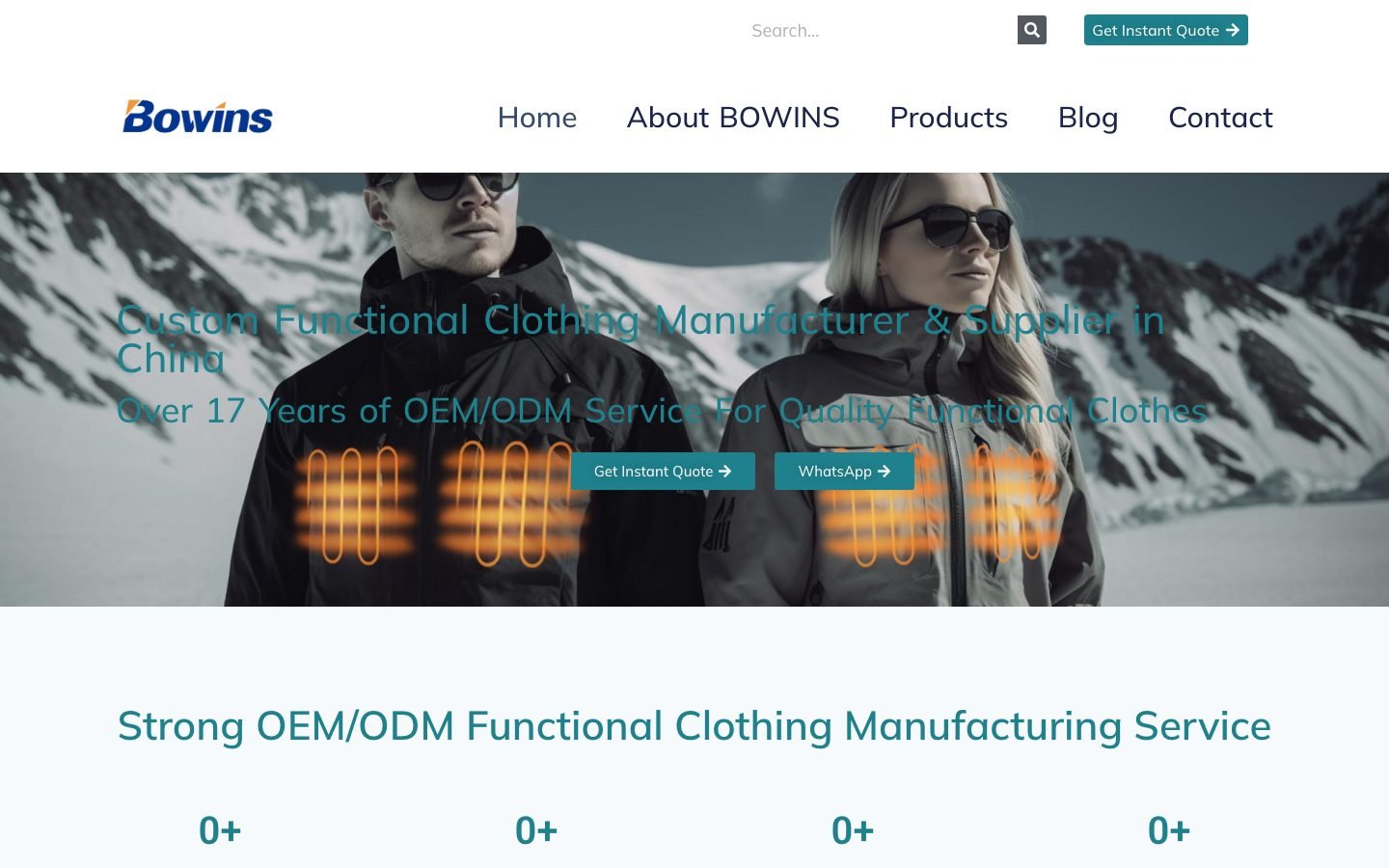
BOWINS Garment is the development-first match in this group. Its site describes OEM work from buyer samples or ODM design development, then a technical package containing drawings, fabrics, trims and sizes. It also describes bulk production after buyer review and approval of samples. Official BOWINS homepage
This sequence makes the supplier especially relevant when the buyer needs to translate a garment concept into a controlled approval process rather than simply enable employees to reorder an existing range. The trade-off is organizational: the buyer should arrive ready to make decisions on the sample and the technical details that form the package. A vague brief makes it harder to use a development model well.
Ask BOWINS to map the buyer’s sample, drawings, fabric choices, trims and size requirements into the technical package, and identify the exact point at which the buyer’s sample approval releases the next stage. That keeps the procurement team focused on the evidence the supplier itself describes.
Cintas

Cintas is the managed-program match. Its site describes managed workwear and related business services, including laundering and delivery of workwear, and it offers consultation for business uniform programs. Official Cintas homepage
This is a different buying proposition from commissioning a custom garment. It suits a team that wants the uniform program connected to ongoing workwear handling and wants consultation around the program. The buyer’s key trade-off is to assess the program workflow, not merely the garment appearance: clarify the wearer population, the garments involved, laundering and delivery expectations, and the decisions the consultation should help resolve.
A productive first brief describes the workforce, the job roles and the operational handoffs. Ask Cintas how its consultation can be applied to the proposed program and how laundering and delivery relate to the specified workwear needs. These questions are grounded in the services Cintas describes without turning them into assumptions about a particular account.
MASCOT
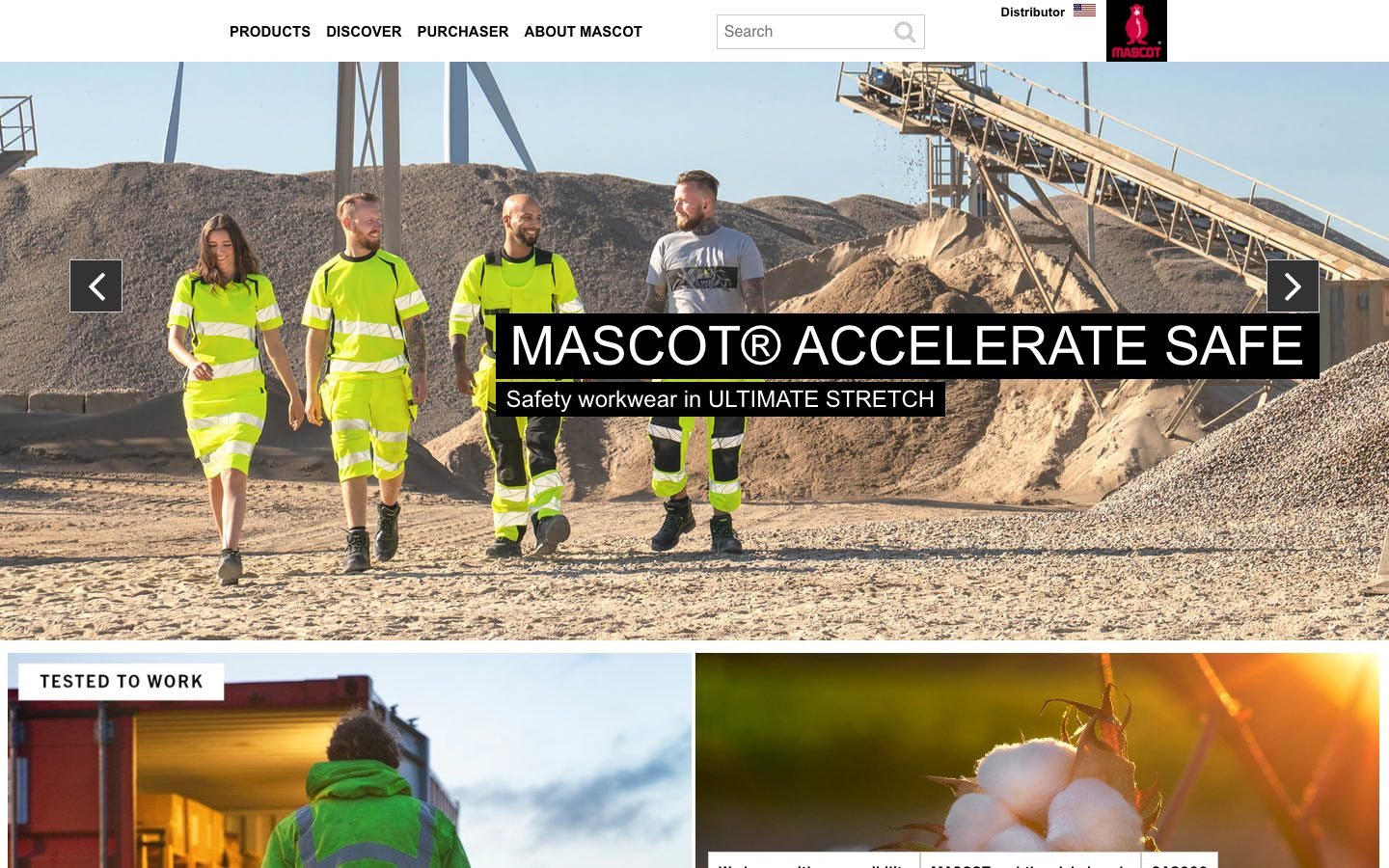
MASCOT is a category-breadth option for workwear programs that may also include safety footwear and accessories. Its site identifies workwear, safety footwear and accessories, addresses service, transport and industry workwear needs, and offers professional advice and customized clothing solutions. Official MASCOT homepage
The upside is a shortlist that can consider several workplace categories together. The buyer-dependent trade-off is that a broader category conversation still needs a sharply defined role matrix: which teams need garments, which need footwear, which need accessories, and where customized clothing is actually required. Treat each line as a requirement to be evaluated, rather than assuming one category determines another.
In the RFQ, separate service, transport and industry wearer groups where relevant. Ask MASCOT which listed category and customized-clothing approach applies to each group, and request advice against the submitted brief. That makes its stated professional-advice offer useful in the buying process.
Model Apparel
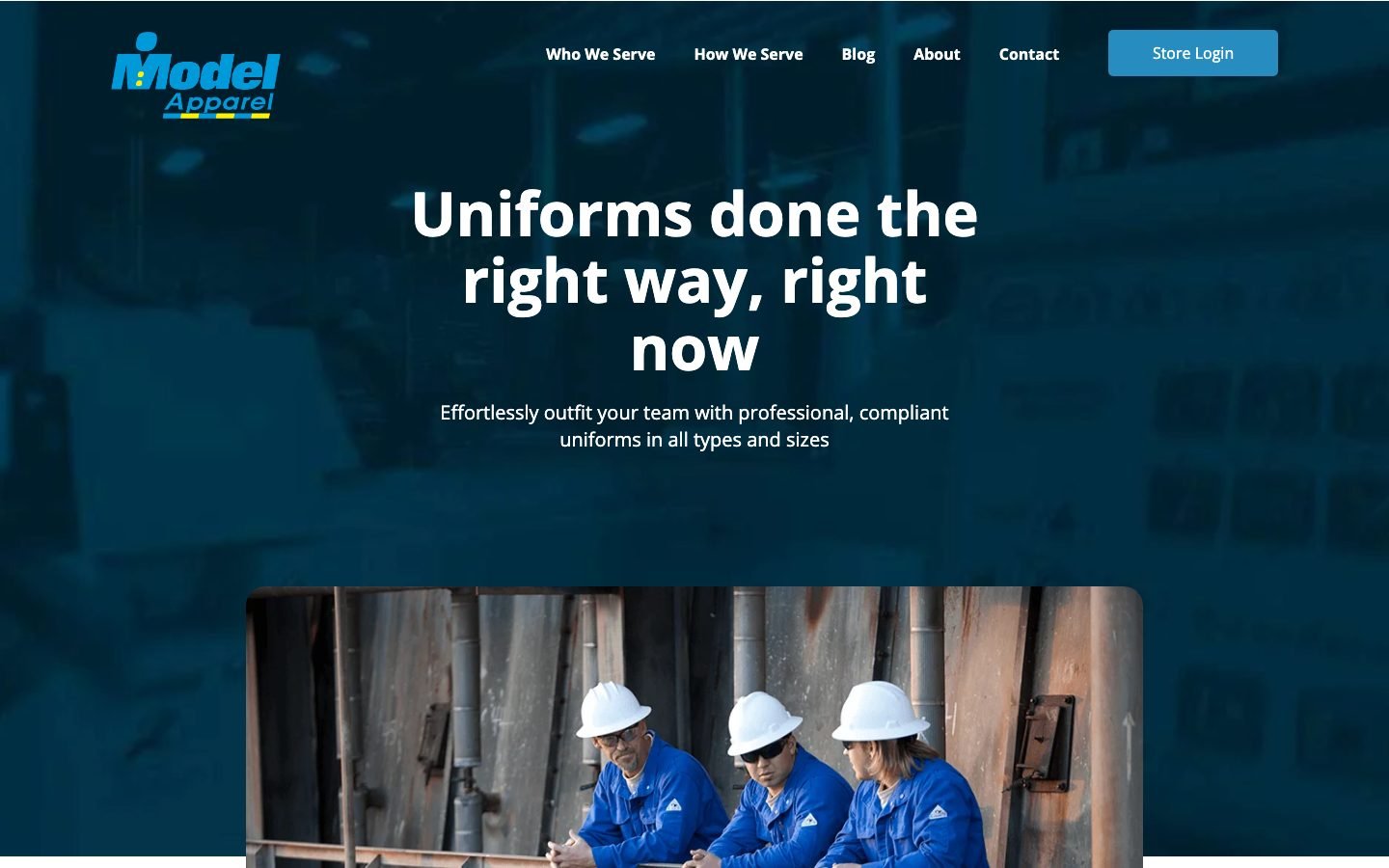
Model Apparel fits organizations whose central issue is controlled, repeatable uniform purchasing. Its site describes a private company store through which employees can access the store and place orders; it also describes spending limits, order history and buyer approval. Official Model Apparel homepage
This model is compelling when procurement needs visibility and governance after an initial assortment has been selected. Instead of asking only which garments are available, define the user journey: who may enter the store, which employee groups can order, what approval is required, what spending limits apply, and which history a buyer needs to review.
The operational trade-off is that the company-store rules must be designed deliberately. Ask for a walkthrough of employee ordering, buyer approval, spending-limit configuration and order-history review using your proposed workforce structure. That lets the team test whether the controls support its internal purchasing policy.
Veelianpro
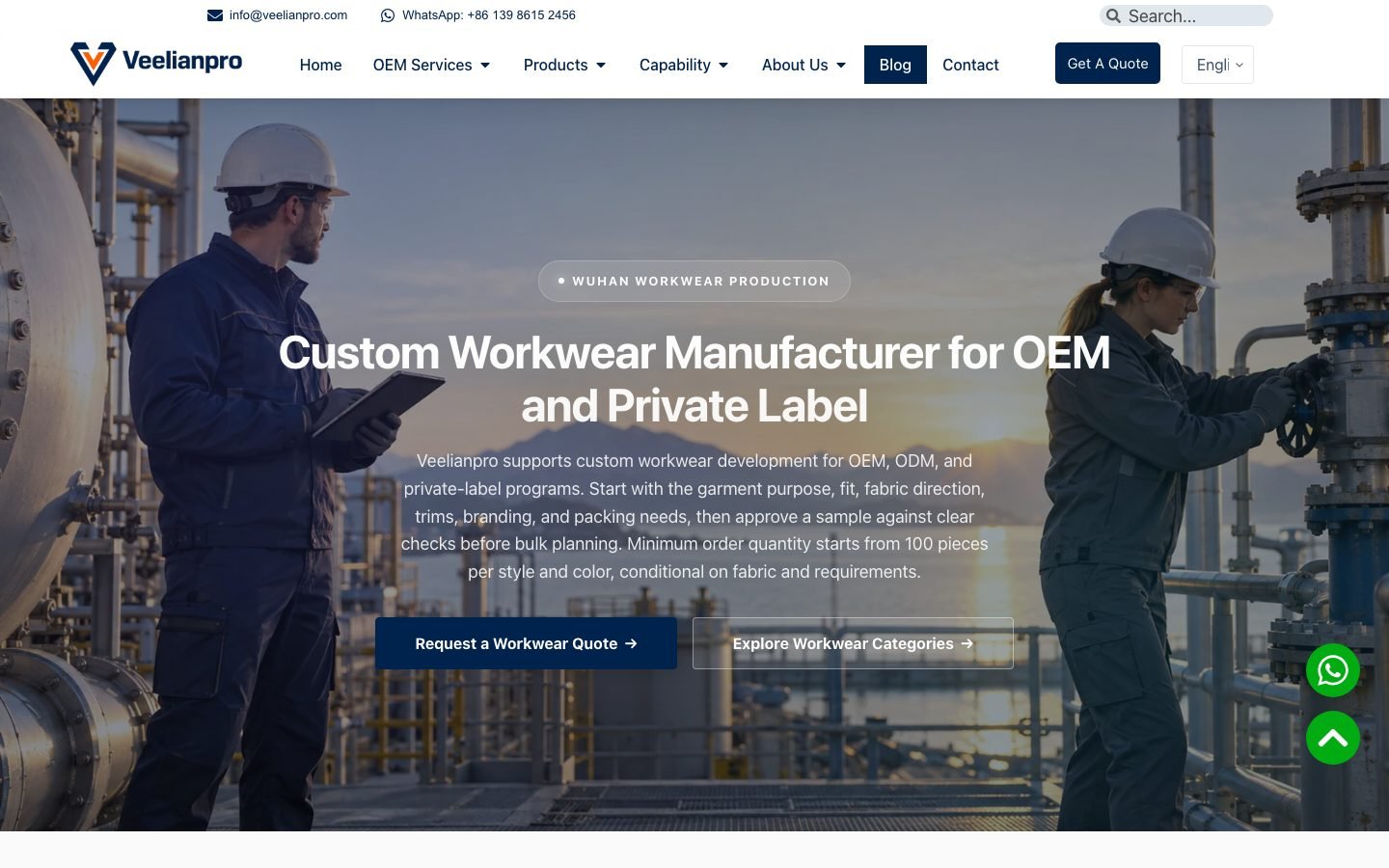
Veelianpro is the fit-first option for buyers planning custom industrial workwear with a brand-program component. Its manufacturing-workwear page describes custom industrial workwear development and OEM, ODM and private-label programs. It also frames fabric, construction and any certification requirements as items to scope for the project. Official Veelianpro homepage Manufacturing Workwear
This is most useful when the buyer has a defined industrial application but needs the supplier discussion to cover the product build and program identity together. The trade-off is straightforward: the project brief must do real work. Fabric, construction and any required certifications belong in the project scope; they should not be presumed from a generic workwear description.
Ask Veelianpro to respond separately on custom development, OEM or ODM route, private-label needs, proposed fabric and construction, and the way the project requirements will be captured. If certifications are part of the buyer’s need, name the requirement in the brief and request a project-specific response.
Build your shortlist
Use this RFQ checklist to make the five supplier conversations comparable:
- State whether the purchase is custom development, managed workwear, a workwear-and-footwear category program, a private company store, or a combination.
- List each wearer group, job role, garment category, footwear or accessory requirement, and branding need.
- Describe the proposed project intake: drawings or samples, fabric and construction requirements, sizing information, and private-label requirements where relevant.
- Name the internal sample reviewer, order approver and employee-ordering rules.
- For a managed program, state whether laundering, delivery and consultation are part of the intended scope.
- Request project-specific samples and a project-specific quote response, with assumptions clearly tied to the submitted brief.
Make one shortlist table internally after replies arrive. Score only the criteria that matter to your program: technical-package fit and sample approval for BOWINS; laundering, delivery and consultation fit for Cintas; category coverage and advice for MASCOT; company-store controls for Model Apparel; and industrial-development, branding and project-scoping fit for Veelianpro. That comparison respects the different supplier models rather than forcing a false ranking.
Questions buyers ask
Which supplier is best for a custom uniform specification? BOWINS is the clearest match when the process needs OEM work from buyer samples or ODM development, a technical package and sample approval before bulk production. Veelianpro is also relevant where custom industrial workwear and OEM, ODM or private-label programs are part of the brief. BOWINS Veelianpro
Who fits a managed workwear program? Cintas describes managed workwear, laundering, delivery and consultation for business uniform programs. Cintas
Who supports employee ordering controls? Model Apparel describes a private company store with employee ordering, spending limits, order history and buyer approval. Model Apparel
Which option covers workwear with footwear and accessories? MASCOT lists workwear, safety footwear and accessories, with stated audiences in service, transport and industry. MASCOT
How should certification requirements be handled? Put the exact project requirement in the RFQ. Veelianpro’s page specifically identifies fabric, construction and any certification requirements as project-scoping items. Veelianpro
Sources
- BOWINS Garment official homepage
- Cintas official homepage
- MASCOT official homepage
- Model Apparel official homepage
- Veelianpro official homepage
- Veelianpro Manufacturing Workwear
Inquiry template
Subject: RFQ and sample request — [program / wearer group]

Hello [Supplier contact],

We are sourcing [custom uniforms / managed workwear / workwear and footwear / employee-order program] for [company / organization]. Please provide a project-specific quote and sample proposal based on the details below.

Program and wearer groups: [roles, headcount, locations or teams]
Product requirements: [garments, footwear, accessories, colors, branding]
Use context: [work tasks and conditions]
Development inputs: [samples, drawings, fabric, construction, trims, sizing]
Branding or label needs: [logo treatment / private label / other]
Ordering and approvals: [employee ordering, approver, spending rules]
Program services requested: [laundering / delivery / consultation, if applicable]
Project-specific requirements: [including any certification requirements]
Sample review contact and acceptance criteria: [name / criteria]
Requested quote format: [line items, assumptions, options]

Please explain how your proposed approach fits this brief and identify the information you need to prepare samples and a project-specific quotation.

Regards,
[Name]
[Company]
[Email]
[Phone]
