


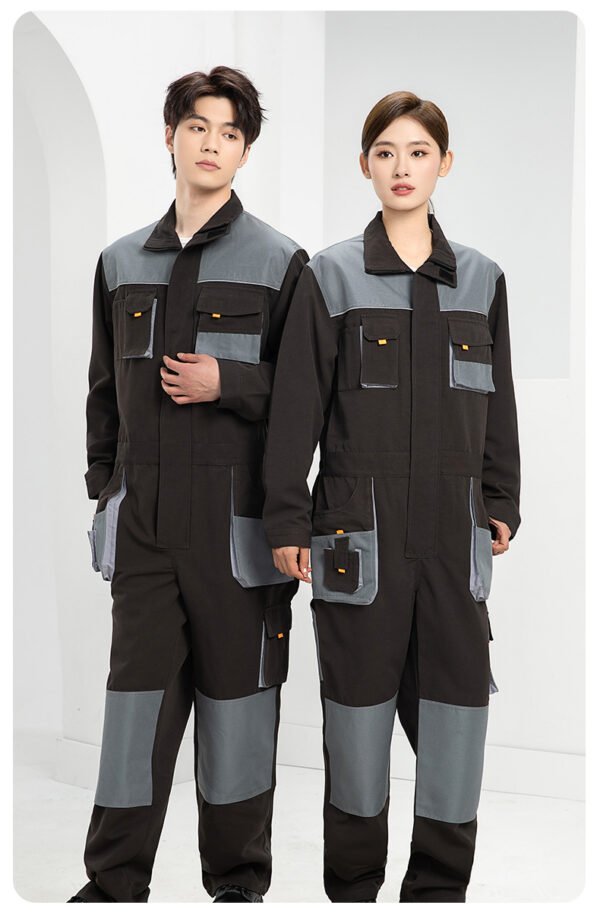



Develop a practical one-piece work coverall with a brushed-feel fabric direction, organized tool storage, contrast-panel options and reinforcement placement tailored to your spring and autumn workforce program.
Develop Custom Work Coveralls and Overalls with Veelianpro
Veelianpro can develop this multi-pocket coverall around your job role, color blocking, fit and branding requirements. Choose pocket functions, fabric handfeel, reinforcement zones, closures, labels and packing, then review a sample before bulk production. MOQ starts from 100 pieces per style and color, subject to requirements.
Define the Workwear Brief
This reference-inspired coverall is a development starting point for teams needing an all-in-one garment for routine site, workshop, maintenance or logistics work. A front opening, long sleeves and full-length legs create a coordinated uniform base. Pocket layout, contrast details and wear-area reinforcement can be adapted to the wearer’s actual tasks.
Map chest, hip and utility pockets around daily tools, personal items, closure preferences and access.
Select a durable workwear fabric and handfeel suited to practical transitional-season use before sampling begins.
Specify reinforcement at knees, elbows, seat, pocket edges or hems according to expected abrasion areas.
Confirm color blocking, graded size range, logo decoration, labels and packing for your private-label program.
Fabric, Fit and Construction Options
Select fabric according to climate, handfeel, durability expectations and care routine. We can source brushed canvas-like, smooth woven workwear or other suitable fabric options for evaluation. Weight, fiber content, colorfastness and finish should be confirmed during development rather than assumed. If moisture management, anti-static, flame, chemical or visibility performance is required, define it as a final-style testing target.
Build the coverall around movement and daily access. Options include a full front zip or concealed closure, adjustable cuffs, elasticated or shaped waist treatment, action back detailing and sizing allowance for layering. Specify chest, hip, cargo, ruler or phone pockets by the items carried. Reinforced panels may be developed at knees, elbows, seat, pocket edges and hems where wear demands it.
From Brief to Approved Sample
Share a tech pack, reference images, wearer measurements, logo artwork and intended use. We can support pattern and fit development, fabric and trim sourcing, decoration choices, labels and packing. Sampling is the stage to check mobility, pocket accessibility, color balance and reinforcement placement. Approve the final specification and any required testing plan before production quotation and bulk release.
- Brief Review Confirm job tasks fit preferences pocket needs and branding goals.
- Fabric Sourcing Source suitable fabric trim and color options for review.
- Pattern Development Develop pattern, size grading and reinforcement placement for approval.
- Prototype Sampling Make samples, review construction, then refine approved production details.
What to Send for a Useful Quote
Wearer Profile Share wearer measurements, size range, layering needs and work conditions.
Design Details Provide color blocking, pocket layout, closures and logo locations.
Protection Targets State required performance targets for testing on approved final style.
Custom Work Coveralls and Overalls Procurement FAQs
Which tools and personal items must each pocket hold?
Define the pocket load first, then specify chest, hip, rear and utility pocket positions, dimensions and closures. Confirm whether items are gloves, phones, pens or hand tools, plus access while bending or seated. Reinforce pocket openings when repeated tool contact is expected.
Which fabric handfeel should we source for sampling?
Choose a brushed canvas-like handfeel for a substantial appearance, or request smoother alternatives when comfort and laundering preferences differ. During sampling, compare drape, surface feel, color appearance and seam behavior. Final fabric selection should match the intended work setting and agreed construction.
Which areas need reinforced construction for this coverall?
Add reinforcement only where the wear pattern justifies it, commonly at knees, elbows, seat, pocket edges or hems. Specify panel shape, stitching and ease allowances before sampling. Review movement in kneeling, climbing and sitting positions, because reinforcement placement can affect comfort and mobility.
What fit and sizing should the pattern accommodate?
Set the target wearer measurements and layering requirement before the first pattern. A coverall needs usable reach, stride and sitting ease without excessive bulk. Confirm grading range, inseam options, sleeve and torso lengths, and try samples on representative wearers performing routine work movements.
Which color blocking and logo placement suit your program?
Choose color blocking that supports team identification and hides likely soil in high-contact zones. Mark logo positions, decoration method and maximum artwork size on the tech pack. Approve color standards, contrast-panel boundaries, labels and packaging details alongside the sample before bulk production.
Which protective targets require testing on the final style?
List every required protective target at inquiry stage, including visibility, electrostatic, flame, chemical or other job-specific needs. These targets must be developed and tested on the exact approved coverall, fabric, trims and decoration. Do not approve production until the applicable requirement and test plan are agreed.
Discuss Your Custom Work Coveralls and Overalls Program
Send target quantity by style and color, size range, artwork, pocket plan and delivery destination for a tailored coverall development quotation.


Reviews
There are no reviews yet.