
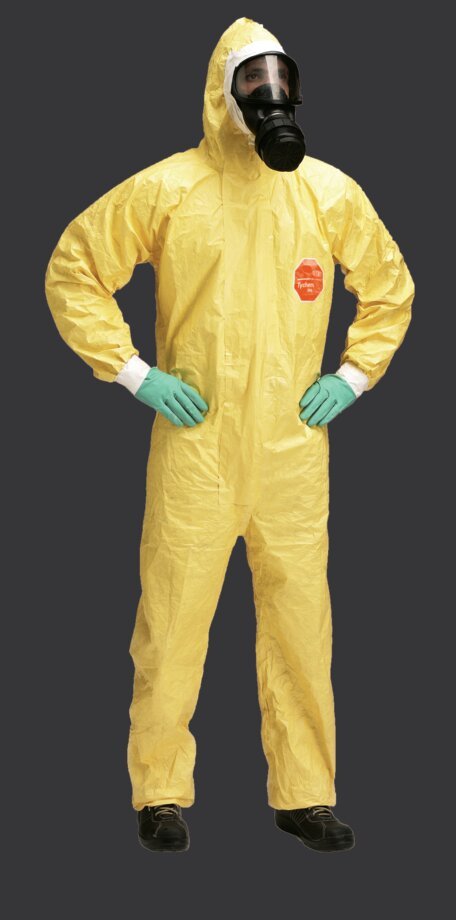
Develop a hooded limited-use chemical-resistant coverall around your risk assessment, combining pattern engineering, material and trim sourcing, seam options, and private-label packing for controlled industrial, processing, pharmaceutical, and clean-task workflows.
Develop Chemical-Resistant Hooded Coveralls with Veelianpro
This hooded chemical-resistant coverall can be developed with elasticated face, wrists, waist, and ankles, thumb loops, taped-seam options, and a covered front zipper. Specify chemicals, contact conditions, lower-leg interface, and closure needs first. MOQ starts from 100 pieces per style and color, subject to approved materials, testing, and customization.
Define the Workwear Brief
Built as a buyer-specified one-piece barrier-garment concept, this style supports practical interfaces for hood, face opening, gloves, footwear, and work movement. It suits development programs for chemical handling, processing, cleaning, food, paper, or pharmaceutical environments where the approved final garment must match the task, wear protocol, and hazard assessment.
Define chemicals, concentrations, contact form, pressure, duration, and target performance testing for the approved final coverall.
Select zipper cover, chin closure, and seam construction to develop around the intended exposure scenario.
Confirm hood opening, respirator clearance, elasticated zones, thumb loops, and boot or glove interfaces for worker movement.
Specify grading, labels, instructions, individual packing, carton configuration, and MOQ from 100 pieces per style and color.
Fabric, Fit and Construction Options
Select a material system after defining the exposure scenario, expected contact method, breathability preference, strength needs, and disposal route. We can source suitable base materials, coatings, films, elastic, zipper components, and barrier tapes for evaluation. Any claim concerning chemical resistance, biological hazards, static control, or particle protection remains a target until the exact finished style is tested.
Specify a shaped hood and face opening, elasticated wrists, waist, and ankles, plus thumb loops to help maintain sleeve position. Development options include stitched-and-taped seam construction, a front zipper with inner and outer protective flaps, and a chin cover. Choose lower-leg finish, boot-flap or sock option, grading, and movement allowance around the wearer’s equipment.
From Brief to Approved Sample
Send the application, chemical list and concentrations, exposure type, wearer layers, sizing, and packaging brief. Veelianpro can develop patterns and fit, source proposed materials and trims, prepare labels and packing, and make samples for review. Confirm final construction and test plan before production; MOQ starts from 100 pieces per style and color, conditional on requirements.
- Brief Alignment Confirm exposure scenario, garment concept, fit, branding, and packing requirements.
- Material Planning Source candidate fabrics and trims aligned to approved development targets.
- Pattern Sample Create graded pattern and sample for practical movement review.
- Validation Review Review sample, revise details, then plan final style testing.
What to Send for a Useful Quote
Hazard Details Share chemicals, concentrations, contact conditions, and target validation requirements.
Size Plan Provide size range, wearer tasks, and required movement allowance.
Order Configuration Confirm colors, labels, packing, quantities, and preferred customization options.
Chemical-Resistant Hooded Coveralls Procurement FAQs
Which chemical exposures must the final coverall be tested for?
Specify each chemical, concentration, physical state, contact pressure, temperature, duration, and exposure route before material selection. Veelianpro can source candidate fabrics and build sampling around that brief; the completed, approved style must undergo relevant compatibility and protective-performance testing for the buyer’s defined use.
Can the hood fit specified face protection?
Yes, a hooded one-piece concept can be patterned around the specified respirator or face protection. Provide the interface dimensions, donning sequence, field of vision, and required adjustability; fit samples should confirm hood movement, face-opening coverage, and closure placement before final pattern approval.
Should elastic panels and thumb loops be included?
Yes, elasticated wrists, ankles, and waist can be specified, with thumb loops developed as an option to retain sleeve position. Confirm glove type, wrist mobility, boot interface, wearer sizes, and task motions during sampling, since elastic tension and loop placement should suit the approved pattern and workflow.
Which seam and closure construction is suitable?
Develop the seam and closure system from the actual exposure brief, rather than selecting it by appearance alone. Options can include taped-seam construction and an overlapping zipper cover; prototype reviews should check coverage, reach, stress points, fastening sequence, and the testing plan for the final garment.
Are socks or boot flaps needed?
Choose attached socks, boot flaps, or a separate lower-leg finish according to the buyer’s footwear and contamination-control routine. Share boot dimensions, walking and kneeling demands, slip-risk considerations, and changing procedures; sampling should verify coverage and mobility without creating excess material around the ankle or sole.
How should end-use movement shape the pattern?
Define the operating workflow and movement demands first, then develop the coverall’s pattern, hood, closure, and reinforcement details around them. Provide task duration, postures, equipment interfaces, contamination-control steps, and wearer demographics; fit trials should confirm reach, crouching comfort, sizing range, and practical donning and removal.
Discuss Your Chemical-Resistant Hooded Coveralls Program
Request a quote with target quantity, colors, size range, application details, branding, packaging, delivery destination, and the protective-performance targets requiring validation.


Reviews
There are no reviews yet.